Search the blog:

 
Cargo Trailer Campers Blog Cargo Trailer Campers Blog

The 7x14 Cargo Trailer Camper Build Guide

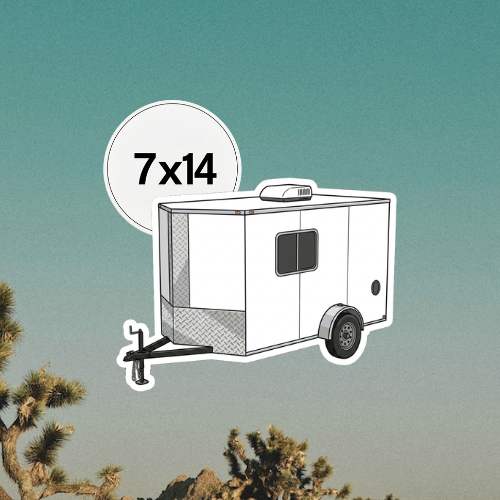
Ready to build out your 7x14 cargo trailer camper? Ninety-eight square feet gives you room for a full bed, a real kitchen, a bathroom with a shower, dedicated storage, and still enough room to stand in the middle.
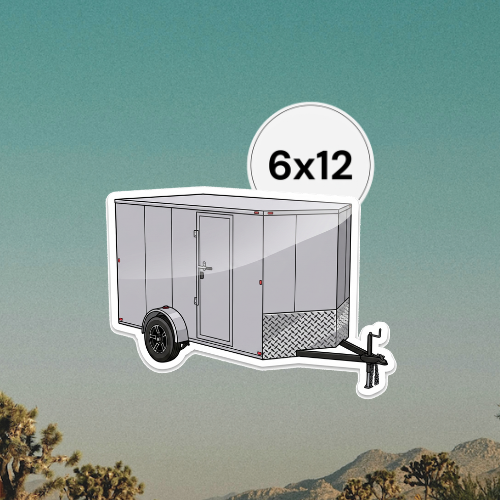
Ready to build out your 7x14 cargo trailer camper? Ninety-eight square feet gives you room for a full bed, a real kitchen, a bathroom with a shower, dedicated storage, and still enough room to stand in the middle of it and not feel like the walls are closing in. It's a serious build that’s heavier than a small trailer, needs a capable tow vehicle, takes more time and money to finish, but the result is a trailer you can take on the road and have it work perfectly just for you.

This guide is written for 7x14 specifically. The layouts, the electrical sizing, the water capacity, all of it is calibrated for this footprint. If you're coming from a smaller build or comparing sizes before you buy, the differences are real enough to be worth understanding before you get to work.

This post contains affiliate links. If you purchase through these links, a small commission may be earned at no additional cost to you. Thank you for supporting this content. For our full disclaimer, click here.

VENTILATION

At 98 square feet, one roof vent is great. Two might be needed if you're building in a separate bathroom. The goal is a front-to-back airflow path that moves heat out at the top and pulls cooler air through from a lower source.

The MAXXAIR Maxxfan Deluxe goes over the sleeping area where you need it most at night. Its rain cover means you can leave it running during a storm without disaster. For the bathroom, Heng's Industries Zephyr I Roof Vent Fan is a solid option that pulls moisture out and is quieter than most, it doesn't get mentioned as often as the Fantastic Fan but it performs at a great price. The RVLOVENT with its built-in thermostat is another nice choice.

On still nights when the roof vents aren't moving enough air on their own, a battery-powered clip fan or portable fan low on the wall keeps air circulating across the bed without running the main fan at full speed all night.

One thing people skip on 7x14 builds and regret: a white bug screen for the door and a magnetic screen door. At this size you'll want the main door open a lot in the evenings. Both let air through and keep bugs out without having to think about it.

‍ ‍

Pin it for later

The 7x14 Cargo Trailer Camper Build Guide

HEATING & COOLING

A 7x14 is big enough that heating and cooling the whole space takes more deliberate planning than a smaller build.

For heat, the Mr. Heater Buddy handles three-season camping in a 7x14 without much trouble. Cold weather camping (anything below freezing for extended trips) is where a lot of builders upgrade to a catalytic safety heater as a primary source instead of a backup. It burns cleaner, produces no open flame, and runs longer on a tank. A wood stove fan helps move heat from the source through the cabin instead of letting it pool in one spot. Get the propane gas detector and mount it low which is non-negotiable at any size.

For cooling, the 7x14 is where the LETO mini split starts making real sense. It's sized for a space like this, it's quiet, it heats and cools, and it doesn't require a window cutout. The tradeoff is the electrical draw — you need a solid battery bank and ideally solar or shore power to run it comfortably. If you're campground camping most of the time, it's worth the investment. For more casual use, a window AC unit vented through the wall or an RV baggage hatch gets the job done at a fraction of the cost.


ELECTRICAL & POWER

A 7x14 build with a fridge, AC, lights, and devices running needs a real electrical system. Two LiFePO4 batteries with Bluetooth is the right starting point. 200Ah gives you enough reserve to run overnight without shore power. If you're adding solar, size the panels to match. A second LiFePO4 battery in parallel is cleaner than trying to mix battery types.

For the hardwired system: 55 amp power center converter charger, marine breaker box, 30 amp twist lock plug for shore power. Wire 12v USB wall outlets at the bed, the kitchen counter, and the work area, you'll likely use all of them. USB plugs and a USB charger port fill in the gaps. A micro monitor system on the wall tracks battery and tank levels, at this build size you want that information visible without having to check anything manually.

If you're using this as a remote work setup in a cargo trailer camper, which a 7x14 is genuinely suited for, add a portable travel router for better wifi management and a HiBoost cell signal booster or weBoost 4G antenna for camps where signal is thin.


WATER & PLUMBING

A 7x14 can carry a serious water setup. Most full builds run an under-trailer tank in the 40–60 gallon range for weekend use, or larger for extended trips. The 36 gallon fresh water tank works for weekends. If you're going longer or running a full shower regularly, the 125 gallon water tank is an option worth knowing about, it's a lot of water but the 7x14 can handle the weight in a way a smaller trailer can't.

The Ecotemp tankless water heater is still the most popular choice at this size. It mounts outside, heats on demand, no standby draw. Run the system through a 12v sink water pump, a matte black faucet, and a pop-up sink drain. Add a 1 gallon pump sprayer somewhere accessible for quick outdoor rinses for muddy boots, dirty bikes, dusty gear. More useful than it sounds.

THE BATHROOM

At 7x1, you can build out a really nice bathroom that makes your cargo trailer camper feel like home. A 4-foot partition at one end gives you a real wet bath with room to move. A 3-foot partition works if you're tight on cabin space and willing to step over the toilet to shower.

The snap-together shower stall kit can be a fast, no-waterproofing-required solution. Pair it with a shower head with on/off switch, a shower curtain track, and a shower fan in the ceiling to pull moisture out. Bathroom cabinet storage on the wall keeps toiletries organized without using floor space.

For the toilet, the Nature's Head Composting Toilet is the right call for a build this size — the bathroom is large enough to use it without awkwardness, and it eliminates the black tank entirely. The close quarters spider handle version fits tighter partitions. The Dometic 970 Toilet is a good option if you want a more traditional RV toilet with a real flush. It requires a grey tank but looks and feels more like a home bathroom. The OGO Origin and Separett Villa round out the composting options if you want to compare before deciding.

An accordion privacy door is still the most space-efficient partition. For a 7x14 build where the bathroom is genuinely separate, a marine window for the door on the bathroom partition adds light and ventilation without compromising privacy.

KITCHEN

The 7x14 kitchen has room to be genuinely functional. A full counter run along one sidewall, cabinets above and below, a real stove, a real fridge, and still enough counter space to actually prep food.

A propane camp stove handles most cooking, or go with a portable induction cooktop if your electrical setup supports it. The Coleman camp oven is worth having if you cook real meals on the road — it fits over a two-burner and gets hot enough to bake. A retro microwave or the retro red version fits on the counter without looking like an afterthought if you're going for a styled interior.

Cold storage: a 12v refrigerator under the counter is the right call at this build size. A Frigidaire compact or mini fridge works if you're not running 12v, and the retro-style fridge is still a popular personality pick. An electric tea kettle and a camping essentials cookware kit round out the kitchen without taking up much space.

A collapsible bucket and mesh laundry bag tuck under the sink and handle camp washing — small things that make longer trips noticeably less annoying.

SLEEPING

A 7x14 fits a queen-sized sleeping surface across the back wall without fighting for it. Most builders run a full-width platform at the rear, 7 feet wide, as deep as the layout allows, with serious storage underneath.

A 6-inch memory foam mattress cut to size is still the right call. Six inches keeps headroom reasonable on a raised platform. Under-bed storage baskets organize what's underneath, and woven rope storage baskets work well wall-mounted above the bed for things you reach for regularly. Pillow cases worth mentioning — a lot of builders cheap out on bedding and regret it. Good sleep matters on a long trip.

For builds where you need a dinette or a second sleeping surface, the RecPro 42" Dinette Booth and Bed Set is the fastest pre-built option. The RecPro Lagun Leg Table System is worth considering if you want a wall-mounted table that folds completely out of the way, it gives the cabin real flexibility. The Houseables 360 Degree RV Table Mount and Caravan Folding Table Kit are solid alternatives at different price points. A convertible sleeper chair near the door works well as a reading chair during the day and a guest bed when needed.

If you're building for a family or need to sleep more than two, the Disc-O-Bed bunk system fits in a 7x14 without dominating the layout.

WORKING ON THE ROAD

A 7x14 is genuinely usable as a mobile workspace. The space exists for a dedicated desk area in a way it doesn't in smaller builds.

A laptop shelf mounted to the wall keeps the work surface off the kitchen counter. A laptop stand with 360° rotating base or foldable laptop bed desk works if you want flexibility. A lap desk is the low-commitment version. For video calls, a 5" ring light makes a real difference when you're parked in a dark site. A GLUIT cord organizer keeps the inevitable cable mess from taking over the workspace.

Signal: the portable travel router manages wifi from multiple sources and keeps your devices connected cleanly. The HiBoost signal booster pulls in a usable cell signal at sites where your phone shows one bar.

FLOORING & INTERIOR FINISHES

At 98 square feet the finishes carry more visual weight than in smaller builds. Light oak peel-and-stick flooring is warm and pairs with almost anything. Grey wood vinyl plank gives a cooler, more modern feel. For the kitchen backsplash, diamond-plate is the classic cargo look. A peel-and-stick subway tile backsplash, geometric backsplash, or metal backsplash all work for a more styled kitchen. Vinyl stamp wallpaper on the wall behind the bed adds depth without weight. A wall mirror on the opposite wall opens the space up — still worth it at this size. Cabinet pulls on every door make custom cabinets look nicely finished.

LIGHTING

Recessed ceiling lights throughout for overhead, battery sconce lights at the bedhead, LED strip channels under the kitchen cabinets and under the bed platform. Battery string lights along the ceiling perimeter add warmth that overhead lights can't. A ceiling light as a central fixture ties the main living area together. Outside, solar-powered lights around the campsite cost nothing from your battery system.

ENTRY & STEPS

Worth mentioning at this size: the step up into a 7x14 can be awkward depending on how your trailer sits and how you've leveled it. An adjustable RV step handles variable ground heights better than a fixed step. The permanent install RV step is cleaner if you want something that feels built-in. Both make getting in and out with gear in your hands a lot less precarious.

SECURITY

A 7x14 with a full build inside is worth protecting seriously. The Rhino USA Locking Hitch Pin and Master Lock Universal Coupler Lock cover the main theft points. The Trimax T5 Hardened Receiver Hitch Lock is a step up in durability if you're storing the trailer long-term. The Proven Industries Model 2516 is the most serious coupler lock in the lineup — worth it for extended storage. The CZC AUTO Coupler Lock and AUTMATCH Trailer Hitch Lock are solid mid-range options.

For the door, the RVLOCK keyless entry with remote is worth every dollar — no keys to lose at camp. The V4 Premium Metal RV Door Lock with Keypad is a more robust upgrade if you want a keypad without a remote. The LATCH.IT Black RV Door Lock and Paddle Deadbolt Camper Entry Door Latch are clean, simple options that work with most cargo trailer door frames. Spring-loaded barrel locks on the rear doors add a second layer without modification. Stick a few GPS tracking security stickers on visible spots — a cheap deterrent that works.

LEVELING, JACKS & TOWING

A fully built 7x14 gets heavy. Water, batteries, gear, and build materials add up fast — know your loaded weight before you tow. A portable tongue scale before every trip is a good habit. The Andersen weight distribution hitch is not optional at this size if your tongue weight is more than 10% of your tow vehicle's weight — it changes how the whole rig handles. A swivel extension mirror makes lane changes and backing into sites manageable with a 7-wide trailer.

Swing-down stabilizer jacks or mounted scissor jacks at all four corners stabilize a heavier build properly. Stackable leveling blocks handle uneven sites. A telescoping ladder is worth having for roof access and any overhead work. A tongue toolbox up front keeps towing gear, locks, and leveling blocks organized and out of the cabin. A spare tire cover is a small finishing detail on the outside.

CAMPSITE GEAR

A 7x14 builds out a comfortable interior but the outdoor living setup still matters — you'll cook outside, eat outside, and spend evenings outside more than you expect. Comfortable portable chairs are worth the money. A foldable camping table handles outdoor meals. An outdoor rug defines the site. The Coleman screened canopy is worth bringing on any trip longer than a night.

For entertainment: cornhole actually gets used, glow-in-the-dark bocce keeps evenings going after dark, and a portable projector for movie nights outside is one of the best additions to a camping setup. A portable Bluetooth speaker is obvious — get a waterproof one. String lights and battery-powered lanterns handle the lighting outside. A hammock for afternoon naps. Fork mounts for bikes on the tongue or rear if you're bringing mountain bikes — a 7x14 is popular with riders who want gear storage inside and bikes accessible outside. Folding stools and folding cup holders for extra seating at the site.

THE HONEST TAKE ON A 7x14

The 7x14 is a full build. Not a weekend project — a real one that takes planning, time, and a budget that reflects what you're actually building. The payoff is a trailer that functions like a small apartment on wheels. Everything works, nothing feels like a workaround, and you stop noticing the size after the first trip.

The builds that struggle at this size are the ones that try to wing the layout. Before you buy anything, draw the floor plan and decide where the bathroom goes. That one decision controls everything else — the electrical runs, the plumbing, the kitchen position, where the bed lands. Get that locked in first and the rest of the build follows a logical order.

Read More
Cargo Trailer Campers Blog Cargo Trailer Campers Blog

The 6x12 Cargo Trailer Camper Build Guide

This guide is written specifically for 6x12 cargo trailer camper builds, with suggestions for this unique footprint, with layouts and tradeoffs.
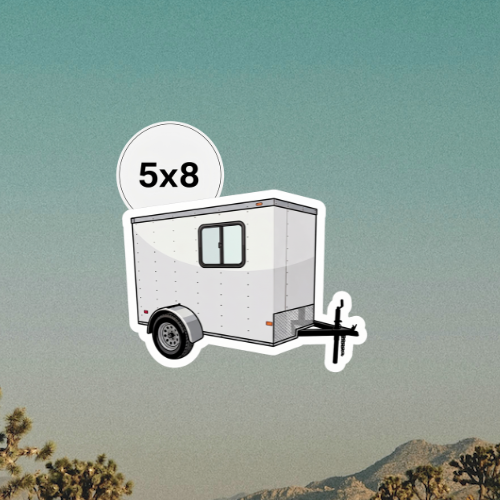
The 6x12 is a super popular cargo camper build, and for good reason. Seventy-two square feet is enough to fit a real bed, a real kitchen, and a real bathroom without the build feeling like an impossible puzzle. It tows behind most half-ton trucks and a lot of SUVs. It fits in a standard garage. And compared to an 8-wide trailer, the lighter weight and narrower profile make a genuine difference on the road.

This guide is written specifically for 6x12 builds, with suggestions for this unique footprint, where the layouts and tradeoffs are specific enough to be worth calling out directly.

This post contains affiliate links. If you purchase through these links, a small commission may be earned at no additional cost to you. Thank you for supporting this content. For our full disclaimer, click here.


VENTILATION

In a 6×12 cargo trailer camper, one roof vent fan is enough. The MAXXAIR Maxxfan Deluxe makes a great main vent for a 6x12. The rain cover means you can run it during a storm, which matters on longer trips. Put it over the sleeping area where you actually need airflow at night. A 12v mini fan low on the wall helps move air through the cabin on hot nights when the roof vent fan needs a little assistance to get the air moving.

‍ ‍

6x12 cargo trailer camper at the beach

Pin it for later

The 6x12 Cargo Trailer Camper Build Guide

HEATING & COOLING

A 6x12 is small enough that the Mr. Heater Buddy handles cold nights without breaking a sweat. It's also big enough that you'll actually feel the difference between a warm end and a cool end if the trailer isn't insulated well. Spray foam or install foam board insulation before you build anything else. Get the propane gas detector and mount it low near the floor where propane settles. The catalytic safety heater is worth having as a cleaner-burning backup.

For cooling, a 6x12 is a realistic candidate for a window AC unit. Most builders cut it through a sidewall or vent it through an RV baggage hatch. The Midea window AC is a proven option at this size. If your electrical setup is serious, the LETO mini split is a substantial upgrade that is quieter, more efficient, and it doubles as a heater.

ELECTRICAL & POWER

A 6x12 usually has enough room for a proper hardwired electrical system, and it's worth doing right. The builds that regret skipping it are the ones trying to run a fridge and AC off a portable power station six months later.

One LiFePO4 battery with Bluetooth handles most 6x12 setups comfortably for lights, fans, phone charging, and a 12v fridge without issue. If you're running AC or a larger fridge, add a second battery nd size your solar accordingly. Wire in a 55 amp power center converter charger, a marine breaker box, and a 30 amp twist lock plug for shore power at campgrounds. 12v USB wall outlets throughout the cabin keep devices charged without hunting for a plug. A micro monitor system on the wall tells you battery state and tank levels at a glance.

If you're not ready for a full hardwired system yet, the Bluetti Portable Power Station works as a starting point for many campers.

WATER & PLUMBING

A full plumbing system fits comfortably in a 6x12 without dominating the layout. This is where the 6x12 pulls ahead of smaller builds because you can have running water, a real sink, and possibly even a shower without major compromises.

A 36 gallon fresh water tank mounted under the trailer is the right size for weekend trips for two. It won't run out if you're mindful, and it doesn't weigh the trailer down when full the way a larger tank would. Run it through a 12v sink water pump, a matte black faucet, and a pop-up sink drain for a clean finished look. The Ecotemp tankless water heater mounts outside and heats on demand with no standby power draw, no tank to maintain. The CampLux water heater is a solid alternative at a lower price point.

THE BATHROOM

A 6x12 can fit a real bathroom if the layout is right. Not spacious, but functional with a shower, toilet, privacy door. Most builders partition off 3 to 4 feet at one end of the trailer for it.

Install a shower head with on/off switch to stretch your water supply and a shower curtain track to close it off. Position your roof vent fan close to the bathroom ceiling to pull moisture out and keep the space from getting mildewy. Add bathroom cabinet storage to keep toiletries off the floor.

For the toilet, the Nature's Head Composting Toilet is the right long-term choice for a 6x12. The bathroom is big enough to use it comfortably and you never have to deal with a black tank. The close quarters spider handle version fits tighter partitions. The OGO Origin is a newer design worth considering if you want an electric agitator. The Thetford Porta Potti works fine if you want to keep it simple and portable.

An accordion privacy door is the most space-efficient partition option. It slides fully out of the way when not in use and takes up almost no wall space.

KITCHEN

The 6x12 kitchen can be a real kitchen with counter space, a stove, a fridge, and storage above and below. Most layouts run the kitchen along one sidewall opposite the door, leaving the back wall for the bed.

A two-burner propane camp stove handles most meals. A portable induction cooktop is a cleaner option if your power setup supports it. The Coleman camp oven sits over a two-burner stove and is worth it if you actually bake — it gets surprisingly hot. A retro microwave fits on the counter if you want one without taking over the layout.

A 12v refrigerator fits under the counter and is the single biggest quality-of-life upgrade in a 6x12 build — no ice runs, no soggy food, consistent temp. The retro-style compact fridge is a popular choice for styled interiors if you're not running 12v. An electric tea kettle is worth the counter space for better mornings.

SLEEPING

Most 6x12 builders run a full-width platform bed across the back wall — 6 feet wide, however deep your layout allows, with storage underneath. That's a genuinely comfortable sleeping setup with room to spare.

A 6-inch memory foam mattress cut to size is the right call for a platform bed. Six inches keeps the headroom reasonable without sacrificing comfort. Under-bed storage baskets make the platform storage actually usable instead of a dark void you avoid. A bench cushion along the opposite wall gives you daytime seating that doesn't cut into the sleeping footprint.

If you need to sleep more than two, the Disc-O-Bed bunk system fits in a 6x12 and folds flat during the day. The RecPro 42" Dinette Booth and Bed Set is worth considering if you want a dinette that converts — it saves custom build time and looks finished.

FLOORING & FINISHES

In a 6x12 the finishes are visible enough to matter but the space is forgiving enough that you have real options. Light oak peel-and-stick flooring is warm and easy to install. Grey wood vinyl plank works better if you're going for a more modern feel.

For the kitchen, diamond-plate backsplash is the classic cargo look and holds up well. A peel-and-stick subway tile backsplash, geometric backsplash, or metal backsplash all work for a more styled kitchen. Vinyl stamp wallpaper on the back wall behind the bed adds depth without weight. A wall mirror makes the space feel noticeably bigger and brighter. Finish the cabinets with cabinet pulls to make custom work look intentional.

LIGHTING

Recessed ceiling lights are the cleanest overhead option in a 6x12 and worth the wiring effort if you are doing a full electrical system. A flush ceiling light works as a single fixture if you're keeping it simple. Battery-operated sconce lights at the bedhead need no wiring at all. LED strip channels under the kitchen cabinets and under the bed platform add ambient light that makes the space feel finished. Battery string lights along the ceiling edge are low-effort atmosphere. Outside, solar-powered lights around the campsite cost nothing from your electrical system.

SECURITY

The Rhino USA Locking Hitch Pin and Master Lock Universal Coupler Lock together cover the two main theft points. For longer storage, the Trimax UMAX100 or Proven Industries Model 2516 are the most serious options. The RVLOCK keyless entry with remote is a worthwhile door upgrade. Spring-loaded barrel locks add a second layer to rear doors. The CURT 23518 Hitch Lock is a solid everyday option if you want something straightforward.

LEVELING, JACKS & TOWING

A 6x12 with a full build can get heavy enough that leveling deserves real attention. Mounted scissor jacks or swing-down stabilizer jacks stabilize it once you're level. Stackable leveling blocks handle most uneven sites quickly. If the build is on the heavier end, the Andersen weight distribution hitch makes a real difference in how the trailer tows. A portable tongue scale before every trip is a good habit — a 6x12 with water, gear, and a full battery bank adds up faster than you'd think.

A tongue toolbox keeps towing gear and leveling blocks organized without eating into cabin storage. A swivel extension mirror makes backing into tight sites much less stressful. A telescoping ladder is worth having for roof access and any overhead work during the build. A fun spare tire cover is the finishing touch on the outside.

CAMPSITE GEAR

A 6x12 is comfortable enough inside that you won't feel forced outside all the time, but the outdoor setup still matters. Comfortable portable chairs are worth spending real money on. A foldable camping table handles meals outside when the weather cooperates. An outdoor rug defines the site and cuts down on dirt tracking in. The Coleman screened canopy is worth bringing on longer trips to handle shade and bugs together.

A hammock for afternoon downtime, string lights for after dark, a portable Bluetooth speaker, battery-powered lanterns as backup, and a portable projector for movie nights round out the site without any of it taking up space inside.

THE HONEST TAKE ON A 6x12

The 6x12 hits a real sweet spot. It's big enough to build a complete living setup with a bed, kitchen, bathroom, storage but without the weight and cost of going wider. It's small enough to tow comfortably behind a half-ton truck or a capable SUV and park without stress.

The builds that struggle at this size are the ones that try to cram in too much. Pick your layout before you buy anything, decide early whether you're doing a full bathroom or keeping it simple, and size your electrical to match what you're actually going to run. Everything else follows from those three decisions.

Read More
Cargo Trailer Campers Blog Cargo Trailer Campers Blog

The 5x8 Cargo Trailer Camper Build Guide: Every Part That Actually Fits

Planning a 5×8 cargo trailer camper build? Forty square feet sounds impossible until you see a well-planned build…and then it clicks.
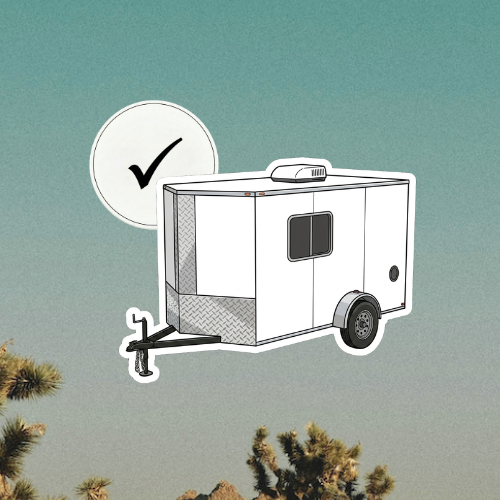
Planning a 5×8 cargo trailer camper build? Forty square feet sounds impossible until you see a well-planned build…and then it clicks. The constraint is the point. You can't bring everything, so you bring the right things, and the result is a rig that's cheap to tow, easy to park, and ready to go on a weeknight.

This guide is specifically for 5x8 builders. A lot of the general cargo camper advice out there assumes you have an 8x16 to work with. You don't, and that changes almost every decision on this list.

This post contains affiliate links. If you purchase through these links, a small commission may be earned at no additional cost to you. Thank you for supporting this content. For our full disclaimer, click here.

VENTILATION

In a 5x8, stale air becomes a problem faster than in a larger build because you're sleeping in a tighter envelope. A roof vent is not optional.

The Fantastic Fan is the right call here over the Maxxfan. In a 5x8 the Maxxfan's extra features are hard to justify when every dollar and every pound matters. The Fantastic Fan moves plenty of air for a 40 sq ft space and installs in a standard 14" opening. Add a 12v mini fan clipped somewhere low to create cross-circulation with hot air up and out, cooler air moving across your sleeping surface.

Skip the battery-powered clip fan unless you're truly off-grid with no 12v wiring. The mini fan pulls almost nothing from your battery system and runs all night without a thought.

Pin it for later:

The 5x8 Cargo Trailer Camper Build Guide: Every Part That Actually Fits

HEATING & COOLING

Cooling a 5x8 with a window AC unit is possible but it's a real conversation. A standard unit pulls 5–8 amps continuously, which is a lot to ask from a small battery setup. Most 5x8 builders skip it entirely and rely on the roof vent plus a well-insulated shell for three-season camping.

For heat, the Mr. Heater Buddy is the answer. It's compact, it works, and it doesn't require any permanent installation. In 40 square feet it gets warm fast. Crack the roof vent when it's running. Get the propane gas detector in a space this small, CO buildup happens faster than you'd expect.

If you do want cooling and have the electrical setup for it, a small window AC unit cut through the wall is doable. Just plan the electrical before you cut anything.

ELECTRICAL & POWER

Most 5x8 builds run lean on power such as a single battery, a few lights, phone charging, and maybe a fan. The Bluetti Portable Power Station is genuinely the right call for a lot of 5x8 builders. No wiring, no breaker box, no converter. Charge it at home, bring it with you, done.

If you want a hardwired setup, one LiFePO4 battery with Bluetooth is plenty for a 5x8 if you're not running AC. Wire in a couple of 12v USB wall outlets and call it. You don't need a marine breaker box and a 55 amp converter unless you're running real appliances, but if you want shore power capability, the 30 amp twist lock plug is worth adding.

One thing worth doing regardless of your setup: add a micro monitor system. In a small build you want to know your battery state at a glance.

WATER & PLUMBING

A full plumbing system is one of the bigger decisions in a 5x8 build. It's doable, but it eats into your footprint. Here's the honest breakdown.

If you're weekend camping near facilities, skip the plumbing entirely and use a rechargeable sink pump with a small jug. Lightweight, zero installation, nothing to leak.

If you want real plumbing, keep the tank small. A 36 gallon tank is probably too large for a 5x8 unless it's mounted under the trailer. A 10–15 gallon tank tucked under a bench is more realistic for the space. Run it through a 12v sink water pump, a matte black faucet, and a pop-up drain. The CampLux tankless water heater mounts outside the trailer and keeps the footprint inside clean.

‍ ‍

TOILET

In a 5x8 you are not fitting a separate bathroom room. The toilet either lives behind an accordion privacy door in a partitioned corner, or it stows away when not in use.

The Thetford Porta Potti is the most practical option for this size. It slides under a bench or into a cabinet and comes out when needed. Zero installation, easy to empty. The Trelino Evo is a composting option that's compact enough to work in a 5x8 if you want to avoid the cassette system. The Nature's Head is great but it takes up more floor space than most 5x8 layouts can spare.

SLEEPING

The bed is the dominant feature in a 5x8, there's no getting around it. Most builders run a full-width platform bed across the back with storage underneath. That's roughly 5 feet wide and as deep as you want to push it toward the door.

A fiberglass-free 6-inch memory foam mattress cut to size is the right call. Don't go thicker, you need the headroom. Store everything under the platform with under-bed storage baskets to keep it organized. Woven rope storage baskets work well on wall-mounted shelves if you add them.

Skip the bunk system and the dinette bed combo in a 5x8. There isn't room to make them work without the build feeling like a puzzle you have to solve every night.

KITCHEN

The kitchen in a 5x8 is a counter with a stove on it. That's it, and that's enough.

A two-burner propane camp stove sits on the counter when you're cooking and stores in a cabinet when you're not. A portable induction cooktop is a cleaner option if your power setup supports it — no propane inside the trailer. Skip the microwave. Skip the oven. A 12v refrigerator is worth the investment if you have the electrical for it — it fits under a counter and frees you from ice management entirely. Otherwise a soft-sided cooler stores flat when empty. An electric tea kettle is the one small appliance worth keeping. Mornings are better with it.

FLOORING & FINISHES

In a 5x8, the finishes matter more than in a bigger build. The space is small enough that cheap-looking materials are impossible to ignore.

Light oak peel-and-stick flooring makes the space feel warmer and bigger. A peel-and-stick subway tile backsplash behind the stove pulls the kitchen area together without taking up any space. Vinyl stamp wallpaper on one accent wall adds depth. A wall mirror makes the trailer feel noticeably less tight. Seriously, don't skip this one. Finish the cabinets with cabinet pulls which is a small detail that makes custom work look elevated.

LIGHTING

Don't over-light a 5x8. One or two recessed ceiling lights for overhead, battery-operated sconce lights for bedside, and LED strip channels under the cabinets for ambient light. Battery string lights along the ceiling edge add warmth without any wiring. That's all you need. Outside, solar-powered lights around the campsite perimeter require nothing from your electrical system.

‍ ‍

SECURITY

A 5x8 is light enough that trailer theft is a real concern. Someone can hitch it and drive off fast. The Rhino USA Locking Hitch Pin and Master Lock Universal Coupler Lock together cover the two main points of theft. The RVLOCK keyless entry is a worthwhile door upgrade. Spring-loaded barrel locks add a second layer to the rear doors. For storage situations, the Trimax UMAX100 is a heavier-duty option worth having.

LEVELING & TOWING

A 5x8 is light enough that leveling is usually straightforward. Stackable leveling blocks handle most uneven sites. Mounted scissor jacks stabilize it once you're level. Most vehicles towing a 5x8 won't need a weight distribution hitch — but if your tongue weight is creeping up from a heavy build, a portable tongue scale tells you where you stand before you tow.

A tongue toolbox is especially useful on a 5x8 since interior storage is limited — keep your towing gear, leveling blocks, and locks up front and out of the cabin. A swivel extension mirror makes backing into a site a lot less stressful with a short trailer.

CAMPSITE GEAR

With a 5x8, the outdoor living area becomes an extension of the trailer. You'll spend more time outside than in. Comfortable portable chairs are worth the investment. A foldable camping table gives you the surface you don't have inside. An outdoor rug defines the space. The Coleman screened canopy is worth bringing if you're staying more than a night because it handles bugs and sun at the same time.

A hammock takes the pressure off the small interior for afternoon downtime. String lights outside make the site feel like a place rather than a parking spot. A portable Bluetooth speaker, battery-powered lanterns, and a portable projector for movie nights round out the setup without taking up any space inside the trailer.

‍ ‍

THE HONEST TAKE ON A 5x8

The builds that work in a 5x8 are the ones where the builder accepted the constraints early and designed around them instead of fighting them. Every inch counts. The bed takes priority, the kitchen is minimal, and the bathroom is either tiny or nonexistent depending on how far you're willing to go.

The payoff is real though. A well-built 5x8 tows behind almost anything, fits in a standard parking spot, stores in a one-car garage, and can be on the road in 20 minutes. For solo campers and couples doing weekend trips, it's hard to beat.

Read More
Cargo Trailer Campers Blog Cargo Trailer Campers Blog

The Cargo Trailer Camper Setup Checklist: Every Part You’ll Actually Use

We've pulled from dozens of builds we've covered, reader submissions, and years of community feedback to put together a room-by-room breakdown.
When starting a cargo trailer camper build, people always ask for "the list." The one that covers what you actually need to turn a bare cargo trailer into something you can sleep, cook, and live out of. Not a list of 200 optional upgrades, the real one. The stuff that gets used on every trip.

This is that list.

We've pulled from dozens of builds we've covered, reader submissions, and years of community feedback to put together a room-by-room breakdown. Before you dive in: start with your trailer size and tow vehicle limits before buying anything. A 6x10 build has very different priorities than an 8x20. Some items below, like pre-build showers, water tanks and battery banks, need to be sized for your specific setup.

This post contains affiliate links. If you purchase through these links, a small commission may be earned at no additional cost to you. Thank you for supporting this content. For our full disclaimer, click here.


VENTILATION & AIR CIRCULATION

Without airflow, a cargo trailer turns into a sauna. This is the one area where it pays to spend a little more. A roof vent with a built-in fan changes the feel of the whole trailer — even a basic one.

The MAXXAIR Maxxfan Deluxe is the gold standard roof fan for DIY camper builds. Opens even in the rain, has 10 fan speeds, and the remote is genuinely useful at 2am. Pricier than the others, but worth it if you're camping in summer heat.

If you're keeping costs tight, the Fantastic Fan is the budget-friendly favorite. Installs in a standard 14" roof opening and moves a solid amount of air. The RVLOVENT Roof Vent Fan sits in the middle — solid mid-range with a built-in thermostat.

For smaller spaces, a battery-powered clip fan or 12v mini fan adds circulation without requiring a roof cut.


Pin it for later:

The Cargo Trailer Camper Setup Checklist: Every Part You’ll Actually Use

HEATING & COOLING

The Mr. Heater Buddy is the most common heater in cargo camper builds, period. Runs on 1lb propane canisters, has a low-oxygen shutoff, and warms a small space fast. If you're running propane at all, get a propane gas detector — don't skip it. A catalytic safety heater is a good secondary option with no open flame.

For cooling, most builders vent a window AC unit through a wall cutout or RV baggage hatch. The Haier window AC is a popular pick. If you have a bigger electrical setup, the LETO mini split is a serious upgrade — quiet, efficient, and it heats too.

‍ ‍

ELECTRICAL & POWER

The LiFePO4 RV Battery with Bluetooth lets you check charge level from your phone without digging into the battery compartment — genuinely useful. There's also this alternate LiFePO4 option if you're comparing specs. For builders who don't want to wire a full system, the Bluetti Portable Power Station is plug-and-play and easy to charge at home before you leave.

For hardwired builds you'll need a 55 amp power center converter charger, marine breaker box, and 30 amp twist lock plug for shore power. Wire in 12v USB wall outlets throughout and a micro monitor system to track battery and water levels.


WATER & PLUMBING

A 36 gallon fresh water tank is enough for a long weekend for two people. The Ecotemp tankless water heater is the most popular propane option in CTC builds — mounts outside, heats on demand, no standby draw. The CampLux water heater is a solid alternate at a slightly lower price.

To move water from tank to faucet, grab a rechargeable sink pump or 12v sink water pump. Finish the sink with a matte black faucet and pop-up sink drain.


THE BATHROOM SETUP

A snap-together shower stall kit is the fastest way to get a working shower with no tiling headaches if you have a larger trailer. Pair it with a shower head with on/off switch to save water and a shower curtain track to close it off.

For the toilet, the Nature's Head Composting Toilet is the long-term favorite with no black tank, no chemicals, no hookups. The close quarters spider handle version fits tighter spaces. The OGO Origin is a newer design with an electric agitator that gets good reviews. The Separett Villa is great for odor control. If you just want something simple and portable, the Thetford Porta Potti requires zero installation. The Trelino Evo is a well-reviewed option that's picked up a following in the CTC community.

An accordion privacy door is the most space-efficient way to partition the bathroom, because it’s lighter than a wall, better than a curtain.


KITCHEN & COOKING

A propane camp stove with two burners handles most meals. If your battery setup supports it, a portable induction cooktop is a clean alternative. The Coleman camp oven fits over a two-burner stove and gets surprisingly hot if you want to bake on the road.

A 12v refrigerator is a big quality-of-life upgrade if your electrical system can support it. The retro-style compact fridge is popular for styled interiors — pair it with a retro microwave if the aesthetic matters to you. An electric tea kettle is a small addition that makes mornings noticeably better.


SLEEPING

A 6-inch memory foam mattress is the sweet spot for platform beds — thick enough to be comfortable, thin enough not to eat up headroom. Cut to size at a fabric store or order custom. A bench cushion works well for dinette benches that double as sleeping surfaces.

For family builds, the Disc-O-Bed bunk system folds flat during the day and sets up fast at night. A convertible sleeper chair is great if you want seating that doubles as a bed. The RecPro 42" Dinette Booth and Bed Set is a popular pre-built option that saves a lot of custom build time.

‍ ‍

FLOORING & INTERIOR FINISHES

Light oak peel-and-stick flooring is the most popular option in CTC builds — warm, easy to install, holds up to moisture. Grey wood vinyl plank gives a more modern feel. For the kitchen, diamond-plate backsplash is the classic cargo camper look. A peel-and-stick geometric backsplash, subway tile backsplash, or metal backsplash all work well for a more styled kitchen. Vinyl stamp wallpaper adds texture without weight. Finish with cabinet pulls and a wall mirror to make the space feel bigger.


LIGHTING

Recessed ceiling lights are the cleanest overhead option and easy to wire into a 12v system. A flush ceiling light works for single-fixture smaller builds. Battery-operated sconce lights need zero wiring and are great for bedside. Battery string lights add warmth fast. LED strip channels work well under cabinets or under the bed. Outside, solar-powered lights define the campsite perimeter with zero wiring.


SECURITY & HITCH LOCKS

Cargo trailers get stolen more often than people expect — partly because they look empty. The Rhino USA Locking Trailer Hitch Pin keeps the ball mount from being pulled out. The Master Lock Universal Coupler Lock prevents the coupler from being hitched to another vehicle. For longer-term storage, the Trimax UMAX100 and Proven Industries Model 2516 are the most serious options. The CURT 23518 Hitch Lock and AMPLock Heavy Duty Coupler Lock are solid everyday picks.

For the door, the RVLOCK keyless entry with remote is a popular upgrade. The enclosed trailer cam bar door lock works with factory hardware on most cargo trailers. Spring-loaded barrel locks add a second layer to rear doors without major modification.


OUTSIDE THE TRAILER: CAMPSITE GEAR

Comfortable portable chairs are worth spending actual money on. A foldable camping table gives you a surface for meals and card games. An outdoor rug defines the space and keeps dirt from tracking inside. The Coleman screened canopy handles shade and bugs at the same time.

A portable projector for movie nights outside is worth every penny. A glow-in-the-dark bocce set is the kind of entertainment that actually gets used. A portable Bluetooth speaker is obvious — get a waterproof one. String lights make the site feel like somewhere you want to be after dark, and battery-powered lanterns are good backup. Round it out with a hammock, soft-sided cooler, camping cookware kit, folding stools, and folding cup holders.


LEVELING, JACKS & TOWING

Many builders forget about leveling until they wake up at 3am sliding into the wall. Mounted scissor jacks or swing-down stabilizer jacks are the permanent solution. Stackable leveling blocks are the fastest fix for uneven ground. If your setup is heavy, the Andersen weight distribution hitch is worth every dollar. A portable trailer tongue scale tells you your tongue weight before you tow.

A telescoping ladder is handy for roof access. A tongue toolbox keeps towing gear organized up front. A swivel extension mirror makes reversing a lot less stressful. And a fun spare tire cover is a small detail that personalizes the build from the outside.

‍ ‍

ONE MORE THING

The list above covers the practical stuff, but the thing most builds are missing isn't gear, it's a plan. Before ordering anything, draw out your floor plan and figure out where your bed, kitchen, and bathroom go. That decision shapes almost everything else.

Once you have the layout locked, you can work through this list category by category without buying something that won't fit or won't work with your electrical system.

Read More
Cargo Trailer Campers Blog Cargo Trailer Campers Blog

The Best Cargo Trailer Camper Door Locks for Passenger Entry

Whether you're looking for a simple keyed deadbolt, a keyless entry system, or a heavy-duty cam bar lock, there's a solution for every build and every budget. Here are the best cargo trailer camper door locks worth adding to your conversion.

When you're converting a cargo trailer into a camper, the passenger entry door lock is one of those details that's easy to overlook during your build. The factory latch that comes standard on most enclosed trailers is fine for a job site, but for a camper that you’ll be living and traveling in, it’s worth the upgrade.

Whether you're looking for a simple keyed deadbolt, a keyless entry system, or a heavy-duty cam bar lock, there's a solution for every build and every budget. Here are the best cargo trailer camper door locks worth adding to your conversion.

This post contains affiliate links.If you purchase through these links, a small commission may be earned at no additional cost to you. Thank you for supporting this content. For our full disclaimer, click here.


Why Your Factory Trailer Latch Isn't Good Enough

Most cargo trailers ship with a basic paddle latch or a simple cam bar on the rear doors. These are designed to keep the door closed during transport, not to provide any meaningful security or weather sealing when you're actually living inside the trailer. They're often loose, rattly, and laughably easy to open from the outside with the right amount of persuasion.

When you're using your trailer as a camper, you need a lock that works more like an RV entry door: easy to operate from the inside, secure from the outside, and ideally keyed or coded to give you real peace of mind at camp.

The good news is that upgrading is easier than you think, and the options range from inexpensive drop-in replacements to full keypad systems with remote fobs.


Pin it for later:

The Best Cargo Trailer Camper Door Locks for Passenger Entry

Best Locks and Latches for Passenger Entry

The side entry door of your cargo trailer is where most builders focus their lock upgrade, and for good reason. It's the door you'll use dozens of times a day.

The LATCH.IT Black RV Door Lock is one of the cleanest upgrades available. It's designed specifically for RV-style entry doors and installs in minutes using the existing hole pattern on most cargo trailer doors. The black finish looks sharp against both white and black trailer exteriors, and the deadbolt action is solid and satisfying. A great starting point if you want a straightforward keyed upgrade without overcomplicating things.

If you prefer a more traditional paddle-style handle with deadbolt functionality built in, the Paddle Deadbolt Camper Entry Door Latch is worth a serious look. The paddle handle makes one-handed entry easy when your arms are full of groceries or gear, and the integrated deadbolt gives you the security layer the factory latch completely lacks.

For builders who want to skip keys entirely, the RVLOCK Compact RV Lock Keyless Entry with Remote is one of the most popular options in the cargo camper community — and for good reason. You get a keypad for entry, a key fob remote, and a traditional key backup, so you're never locked out regardless of what happens. The compact form factor fits most cargo trailer door prep cutouts without modification, and the battery life is genuinely impressive for everyday use.

If you want to go all-in on convenience and security, the V4 Premium Metal RV Door Lock with Keypad and Remote is the top-shelf option. It's built from die-cast metal rather than plastic, which makes a noticeable difference in how solid it feels when you grab the handle. The keypad is backlit for nighttime use, the remote range is excellent, and it supports multiple user codes, which is handy if more than one person needs independent access to the trailer.

For a classic keyed RV door lock that just works without any electronics, the Chrome RV Door Lock is a clean, affordable, no-fuss option. It's the closest thing to a standard RV entry door lock and installs easily on most trailer door preps. The chrome finish won't be for everyone, but it's a proven, reliable lock that gets the job done.


For the Cam Bar


If your cargo trailer has rear barn doors or a side cargo door, there's a good chance it's held shut by a cam bar latch. This is the long vertical rod that runs along the inside face of the door, with a handle you rotate to engage a series of cams that press against the door frame and pull it tight. It's a smart, simple mechanism that does a great job of keeping a heavily loaded trailer sealed on the highway.

The problem is that most factory cam bars ship with zero locking capability. Anyone can walk up to your trailer, flip the handle, and open the door. There's nothing stopping them. For a job site trailer hauling lumber and tools, that's an inconvenience. For a cargo camper with your bed, your gear, your solar equipment, and everything else you own inside, it's a real security gap that's worth closing before your first trip.

A cam bar lock adds a keyed cylinder to the handle mechanism, meaning the bar can't be rotated without a key. It's a straightforward upgrade that works with the cam bar hardware already on your trailer, and in most cases it installs in under 20 minutes with nothing more than a drill and a screwdriver.

The Enclosed Trailer Door Lock for Cam Bar Style Latches is a direct upgrade for standard cam bar hardware, adding a keyed lock cylinder to a setup that usually has none. Installation is simple, and it works with the existing cam bar rods already on your trailer.

If your door needs a full latch replacement rather than just a lock add-on, the 36" Enclosed Trailer Door Latch, Cargo Hinged Cam Bar Lock is a complete 36-inch assembly that replaces the entire latch rod mechanism. It's a great option for trailers where the factory cam bar is worn, bent, or just plain inadequate.

The Trailer Swing Door Hinged Cam Bar Lock is another solid full-replacement optio, particularly well-suited for side door applications where a hinged bar style fits better than a straight rod. The build quality is noticeably better than most factory hardware, and it seals the door much more firmly when latched.

Finally, the QWORK Cargo Trailer Cam Bar Lock is a budget-friendly replacement option that covers the basics well. If you're upgrading multiple doors at once and want to keep costs down without sacrificing function, this one delivers reliable performance at a price that won't sting.


Which Lock Is Right for Your Build?

It depends on how you're using the trailer and how much security matters to your setup. Here's the quick breakdown:

For the passenger entry door, the RVLOCK Keyless Entry is the community favorite for everyday livability — no fumbling for keys in the dark, no lockouts, and it installs in under 30 minutes. If you prefer simplicity, the LATCH.IT or the Chrome RV Lock are clean, reliable keyed upgrades that will serve you well for years.

For cam bars, any of the cam bar lock upgrades above are a significant improvement over factory hardware. Start with a keyed lock cylinder add-on if your existing cam bars are in good shape, or go with a full replacement assembly if you want to start fresh.

Either way, upgrading your trailer door locks is one of the easiest wins in the entire build process. It takes an afternoon, costs relatively little, and makes a genuine difference in how secure and livable your finished camper feels.

Read More
Cargo Trailer Campers Blog Cargo Trailer Campers Blog

The Best Composting Toilets for Cargo Trailer Campers

Composting toilets eliminate the need for a black tank, reduce water usage, and make off-grid camping significantly easier. But choosing the right one depends on your space, budget, and how you plan to use your camper.

Composting toilets are one of the most popular upgrades for cargo trailer campers. They eliminate the need for a black tank, reduce water usage, and make off-grid camping significantly easier. But choosing the right one depends on your space, budget, and how you plan to use your camper.

Below are some of the best composting toilets for cargo trailer campers, along with what really matters when choosing one.

This post contains affiliate links.If you purchase through these links, a small commission may be earned at no additional cost to you. Thank you for supporting this content. For our full disclaimer, click here.

Shop this Post:

Best Overall: Nature’s Head Composting Toilet

The Nature’s Head composting toilet is widely considered the gold standard for mobile setups. It’s durable, easy to install, and has excellent odor control thanks to its built-in ventilation system. The urine-diverting design keeps smells down and extends the time between cleanouts.

This model has been proven across thousands of RV and van builds, making it a reliable choice for both beginners and experienced builders.

Best for: Most cargo trailer builds, full-time use

The Best Composting Toilets for Cargo Trailer Campers

Pin it for Later:

The Best Composting Toilets for Cargo Trailer Campers

Best Premium Option: Separett Villa

If you want a more “home-like” bathroom experience, the Separett Villa is a top-tier option. It features a powerful fan-assisted ventilation system and a larger capacity, which makes it ideal for full-time living.

The main downside is that it requires power and more space, so it’s better suited for larger cargo trailer conversions.

Best for: Full-time living, larger trailers

Best Modern Option: OGO Compost Toilet

The OGO compost toilet brings a modern, user-friendly design to the space. Its standout feature is the electric mixing system, which eliminates the need for manual cranking.

It’s compact and designed specifically for mobile living, making it a strong choice for cargo trailer campers who want convenience without sacrificing performance.

Best for: Easy maintenance, tech-forward builds

Best Budget Option: Trelino Evo

For smaller builds or tighter budgets, the Trelino Evo is a great entry-level composting toilet. It’s lightweight, portable, and doesn’t require power or complicated installation.

While it lacks some of the advanced features of higher-end models, it gets the job done and is perfect for weekend trips or minimalist setups.

Best for: Small trailers, budget builds, beginners

Best Hybrid Option: Joolca GottaGo

The Joolca GottaGo is a hybrid between a composting toilet and a bag-based system. It separates liquids and solids but uses disposable bags for easy cleanup.

It’s not a true composting system, but it offers a simple, low-maintenance solution for casual campers.

Best for: Occasional use, simple setups

What to Look for in a Composting Toilet

When choosing the right composting toilet for your cargo trailer camper, focus on these key factors:

Size and footprint: Space is limited, so make sure it fits your layout
Ventilation: Proper airflow is critical for odor control
Ease of emptying: You’ll want a system that’s simple to maintain
Power requirements: Important if you’re running an off-grid setup
Capacity: Consider whether you’re camping solo or with others

Final Thoughts

For most cargo trailer camper builds, the Nature’s Head or OGO offers the best balance of reliability and ease of use. If you’re building on a budget, the Trelino Evo is a solid choice. For full-time living, the Separett Villa provides a more premium experience.

Ultimately, the best composting toilet is the one that fits your space, matches your camping style, and keeps your setup simple and functional.

Read More
Cargo Trailer Campers Blog Cargo Trailer Campers Blog

Cargo Trailer Camping for Adventure Sports: Mountain Biking, Hiking, and More

This post covers how to configure a cargo trailer camper specifically for adventure sports: how to transport and store bikes, where gear storage actually belongs, how to get the trailer level on uneven forest roads, and what camp setup is best to come home to after a long day outdoors.
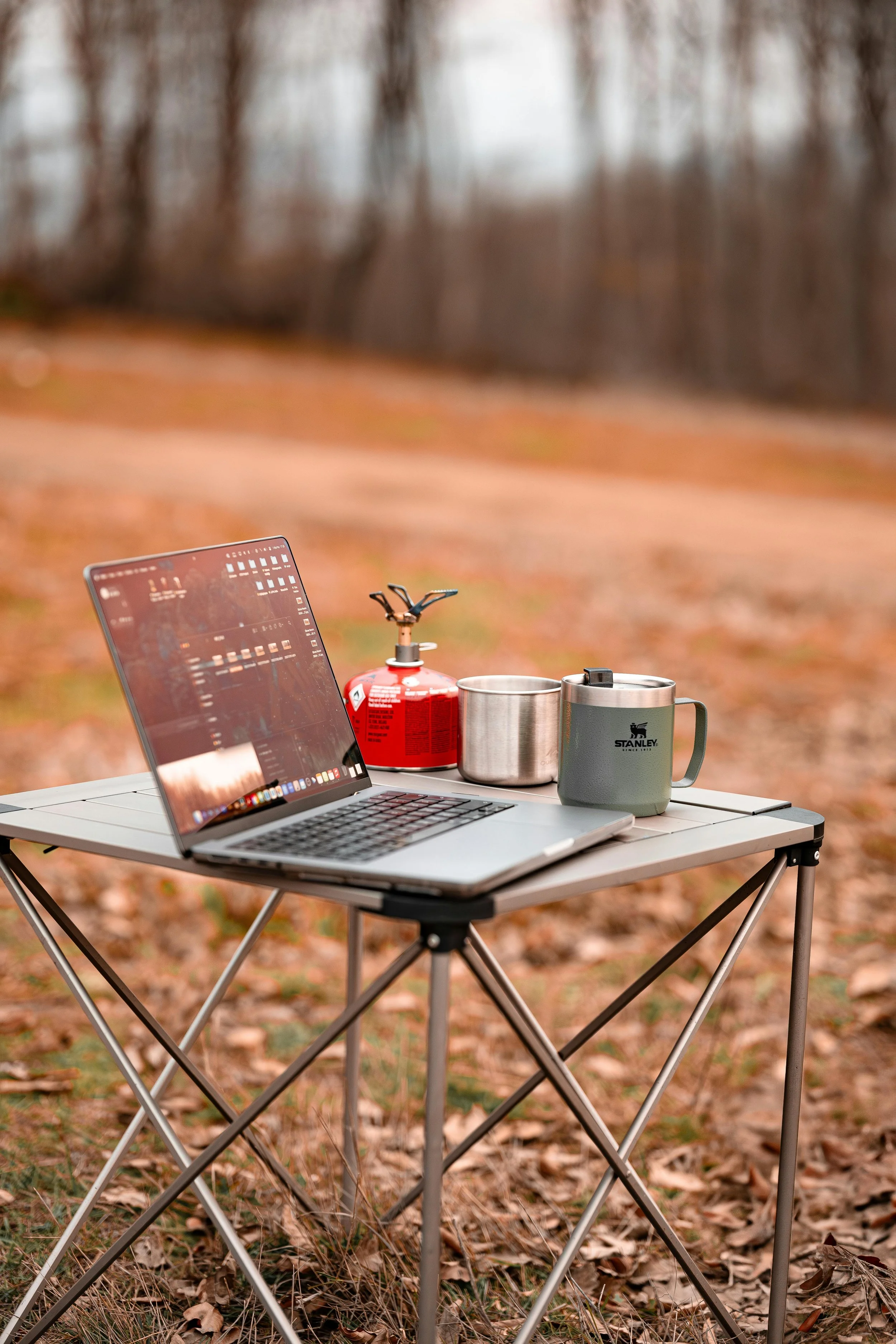
Cargo trailer campers are purpose-built for adventure.

The cargo trailer camper keeps your gear dry, organized, and out of your truck bed. Your bikes don't need to come off the rack every night. Your muddy kit goes in a dedicated corner. Your recovery food is in the fridge. The setup that makes weekend camping comfortable also happens to be a very good basecamp for people who want to actually use their time having fun, rather than managing logistics.

This post covers how to configure a cargo trailer camper specifically for adventure sports: how to transport and store bikes, where gear storage actually belongs, how to get the trailer level on uneven forest roads, and what camp setup is best to come home to after a long day outdoors.

This post contains affiliate links. If you purchase through these links, a small commission may be earned at no additional cost to you. Thank you for supporting this content. For our full disclaimer, click here.

Shop this post:

Mountain biking: Getting your bikes there and keeping them safe

Mountain bikes can be tough to transport. They're too big for most car trunks, they scratch against each other on roof racks in tight parking, and a full-suspension bike bouncing around in a truck bed for three hours isn't ideal. A cargo trailer solves this easily. You mount the bikes inside, they travel in a controlled environment, and they're waiting for you when you open the door and are ready to ride.

Fork mounts

The easiest way to secure bikes inside a cargo trailer is a front fork mount for mountain bikes. You remove the front wheel, drop the fork into the mount, and the bike stands upright and locked in place. A 7x16 trailer fits three to four bikes in fork mounts without crowding. A 7x14 fits two comfortably with room for gear alongside them.

Mount them on a wood rail or aluminum track running along one wall rather than bolting directly to the trailer floor. This lets you slide the mounts to adjust spacing as needed and makes the system adaptable if you're hauling two bikes one weekend and four the next.

The front wheels go in a bag hung on the wall or stacked flat under the bed platform. Takes about 30 seconds per bike and means nothing shifts in transit.

Bike washing and post-ride cleanup

If you're riding technical trails, you're coming back muddy. Having a plan for this before you build saves a lot of grief. A few things that work well in a cargo trailer adventure setup:

  • A dedicated dirty zone near the rear door, separated from the living area by a rubber mat or removable floor section.

  • A garden sprayer or collapsible bucket for basic bike rinse before loading. Doesn't need to be elaborate. Just enough to get the worst mud off the drivetrain before the bike goes on the fork mount.

  • A mesh laundry bag hung near the door for wet kit. Keeps damp gear from sitting against dry gear in a stuff sack.

Pin it for Later:

Cargo Trailer Camping for Adventure Sports: Mountain Biking, Hiking, and More

Gear storage: Where everything actually belongs

The cargo trailer adventure camper isn’t as fun when gear ends up piled on the bed, in the walkway, or in a heap near the door. It works when every category of gear has a designated home that it goes back to automatically, without thinking about it, at the end of a tired day on the trail.

Tongue storage

The tongue of a cargo trailer is dead space in most builds. For an adventure setup, it's some of the most useful real estate on the whole rig. A tongue toolbox or tongue storage box mounted on the A-frame gives you a weatherproof compartment that's accessible without opening the trailer. This is where tools, a pump, a tire plug kit, a small first aid kit, and chain lube live. Everything you might need trailside without digging through the whole trailer.

The tongue box also keeps weight forward on the tongue, which improves towing stability. That's a useful side effect of solving a storage problem.

Tongue weight and towing stability

Loading an adventure trailer (bikes, camping gear, tools, food) puts a lot of weight in a small space, and where that weight sits matters. Too much in the rear and the trailer sways. The general rule is 10-15% of total trailer weight should be on the tongue.

A portable trailer tongue scale lets you check this before you leave the driveway. It takes about two minutes and tells you immediately if you need to shift gear forward. If you're regularly running a loaded adventure trailer over a few hundred miles, the Andersen weight distribution hitch is worth the investment. It transfers some of the tongue weight back to the tow vehicle's front axle and makes the whole rig handle more predictably on the highway.

Getting level on forest roads and trailhead parking

Trailhead parking and dispersed camping spots are not level. The ground at most forest service roads has a cross slope, a fore-aft pitch, or both. Sleeping on a surface tilted 5 degrees feels fine the first hour and miserable by 3am. Your fridge also runs harder when it's off level, and if you're running a propane setup, level matters for safe operation.

Leveling options

For quick site-to-site leveling, stackable leveling blocks are the fastest solution. Drive the low-side wheels up onto the stack until the trailer reads level on a bubble level, then chock. Takes two minutes. Works on any firm surface.

For a more permanent solution built into the trailer, mounted scissor jacks or scissor jacks bolted to the trailer frame give you corner-by-corner adjustment without moving the trailer at all. Crank each corner until you're level. More precise than blocks and better for spots where you're staying multiple nights.

The swing down stabilizer jacks are a good complement to either system. They don't level the trailer. They stop it from rocking side-to-side once it's already level. On a soft or slightly uneven surface, a trailer without stabilizers bounces every time someone moves inside. With them down, the trailer stays solid.

Getting in and out of a high trailer

Cargo trailers sit higher than most people expect the first time they stand next to one. The step up into the rear door is awkward, and can be tough with bike shoes or hiking boots. An adjustable RV step bridges that gap. Some adventure campers also build a small fixed step into the rear bumper during the build, but a portable step stool handles it without any fabrication.

Camp setup at the end of a hard day

This is where the cargo trailer camper earns its keep over a tent or a sleeping-in-the-truck setup. After six hours on a trail, you want to eat something real, sit in an actual chair, and not have to think about setting anything up. The trailer is already there. The food is in the fridge. The only question is how good your outside setup is.

Shade and wind

A Coleman screened canopy set up off the rear of the trailer extends your living space into the outdoors and keeps bugs off you while you're eating and recovering. For mountain biking trips specifically, having a bug-free zone to work on a bike or do a basic tune matters as much as the comfort factor. Set it up on the shaded side of the trailer in the afternoon and it becomes the default gathering spot for the rest of the evening.

Seating and horizontal surfaces

Comfortable portable chairs sound like an obvious inclusion but it's worth being specific: not the flimsy folding chairs that come in a carrying bag. Low-slung camp chairs with a proper back that you can actually sit in for two hours after a ride. Your body will thank you. Pair them with a hammock between trees if your site has them. After a long day on the bike, a hammock for 45 minutes before dinner is hard to beat.

Cold food and drinks

A soft-sided cooler lives outside the trailer for the day, stocked with water bottles, recovery drinks, and trail snacks. The 12V refrigerator inside the trailer handles the stuff you don't want warm: post-ride beer, real food for dinner, dairy. Running the 12V fridge off a LiFePO4 battery means you can park at a dispersed site without shore power and still have cold food at the end of the day. A 100Ah lithium battery keeps a 12V compressor fridge running for two to three days without a charge on moderate temperatures.

Lighting and atmosphere

Trailhead and forest service sites are dark. Properly dark, in a way that makes a headlamp actually necessary and makes good camp lighting worth having. Battery-powered lanterns handle task lighting for cooking and eating. String lights strung under the canopy or along the trailer create a lit area that makes camp feel like a place rather than just a parking spot. A portable Bluetooth speaker at low volume and a cold drink after a hard ride. That's what the trailer setup is for.

Inside: keeping an adventure trailer functional

Sleeping after a long day

Sleep quality matters more on a trip where you're exercising every day. A tired body on a thin sleeping pad on a plywood platform is worse than it sounds. Build the bed platform high enough to use the space underneath for gear, and put a proper mattress on it. The difference between a 2-inch foam pad and a real sleeping surface is meaningful when you're doing back-to-back big days.

Heating for shoulder season

Mountain biking and hiking seasons extend into fall in most parts of the country, which means cold nights. Nights in the 30s are common at elevation in September and October, which is also some of the best riding of the year. A Mr. Buddy heater warms a cargo trailer fast. Run it to take the chill off before bed, crack the Maxxair fan for ventilation, and keep a propane gas detector mounted low on the wall. The detector is cheap and important for safety, so don’t skip it.

One more thing: the spare tire

A cargo trailer running on forest roads and rough trailhead approaches should carry a spare. Most do. Most spare tires are also an eyesore bolted to the back of the trailer. A spare tire cover costs almost nothing and makes the back of the trailer look finished rather than improvised. It also protects the tire from UV degradation, which matters if the trailer sits outside most of the year. Small detail, but the kind of thing that separates a built trailer from a box-with-a-bed.

Building for how you actually use it

The adventure sports cargo trailer doesn't need to be elaborate. The core of it is simple: a place to sleep that's close to the trailhead, dry storage for bikes and gear, and enough camp setup to make the evening worth staying for.

What makes it work is specificity. Fork mounts instead of bungee cords. A tongue box instead of a basic crate. A proper leveling system instead of driving around until it feels roughly flat. A real chair instead of sitting on a cooler. Each of these is a small decision that makes the whole trip run smoother, and none of them require a complicated build.

Read More
Cargo Trailer Campers Blog Cargo Trailer Campers Blog

Remote Work in Your Cargo Trailer Camper: Setup Guide

Taking your job on the road? Here's how to set up a cargo trailer camper for remote work (that actually works).

A cargo trailer conversion has real advantages for remote work that a van or RV doesn't. You have more vertical space, which means an actual desk height that doesn't wreck your back. You can run shore power at campgrounds and have a legitimate electrical setup rather than living off a single battery bank. And because you're towing rather than driving the rig, you can leave the trailer parked at a campsite and use your truck to run errands, get to a coffee shop with better WiFi, or find a coworking space nearby. Here's how to set up a cargo trailer camper for remote work (that actually works).

This post contains affiliate links. If you purchase through these links, a small commission may be earned at no additional cost to you. Thank you for supporting this content. For our full disclaimer, click here.

Shop This Post

Power First, Everything Else Second

Most people convert a cargo trailer camper and vastly underestimate their power needs. Then they're two weeks in, running a laptop off a dying battery, rationing USB ports like it's a survival situation.

A Bluetti portable power station paired with a LiFePO4 lithium battery gives you enough to run a laptop, charge your phone, and keep a hotspot going without watching a percentage bar all day. LiFePO4 batteries are worth the price for more charge cycles, better performance in temperature swings, and they don't require the same babysitting as lead-acid.

Put 12V USB wall outlets and USB charger ports near where you actually work, not just where it was easiest to wire them. Running a cable across the trailer to charge your laptop sounds fine until you've done it 200 times.

Staying Connected is Key

Bad internet ruins the remote work experiment faster than anything. Metal walls kill signal. Weird parking spots kill signal. Being in a campground 15 miles from a cell tower kills signal.

The weBoost 4G slim antenna mounts low-profile and gives your hotspot a real boost in fringe coverage areas. If you're going more remote (think BLM land, forest roads, offbeat campgrounds) the HiBoost off-road booster is built for that. Regular boosters underperform out there; this one doesn't.

A portable travel router is easy to skip until you actually need it. It lets multiple devices share one hotspot, can stabilize a finicky connection, and takes the load off your phone's direct hotspot. Small box, real difference.

Optimizing Your Desk Setup

A good desk setup in a cargo trailer camper can really work overtime. It can be a workspace, countertop for food prep, dining room table, game zone and so much more.

The RecPro Lagun table system is what a lot of full-timers land on. It mounts to the wall, swings out when you need it, folds flat when you don't.

For remote working couples, the RecPro dinette booth set gives you both a seat-and-table combo that converts to sleeping space at night.

A laptop stand with a 360° rotating base keeps your screen at eye level so you're not looking down all day. The foldable laptop bed desk covers the times you're working from bed or the floor — and you will do that sometimes. The lap desk is useful for outside work or when you're parked and want to work from the passenger seat.

If you take video calls, a small ring light makes a bigger difference than you'd expect. You can't always control what's behind you in a trailer, but you can control the light on your face.

Cable management matters more in a small space. A cord organizer keeps the charging cables, hotspot, and power cables from turning your work area into something you'd rather avoid.

Climate Control So You Can Actually Work

A cargo trailer is a metal box. Hot in summer, cold in winter, and the walls don't breathe. You need real solutions.

The MAXXAIR Maxxfan Deluxe is the first thing most trailer converters install and for good reason. It moves serious air, runs in the rain with the cover on, and has a thermostat so you can set it and forget it. For real heat, add a window AC unit, the kind that vents through a baggage hatch or cut-out works in a cargo trailer without a full rooftop install.

When it's cold, a Mr. Buddy heater heats a small space fast and runs on propane. Put a propane gas detector in there if you're running propane inside. It's cheap and not something to skip.

Security: Your Gear Is in There

When your trailer is your office, it has your laptop, monitors, and work gear inside. That changes how you think about security when you step away.

A Rhino USA locking hitch pin is the fast answer when you're just grabbing coffee. For more serious situations, the Master Lock coupler lock, Trimax universal lock, and Proven Industries heavy-duty lock are all worth a look depending on your setup. Throw some GPS tracking stickers on it too for a cheap deterrent that’s easy to do.

The Details That Actually Add Up

Portable chairs for working outside when the weather is good. An electric tea kettle because making coffee without running the propane stove matters on a work morning. String lights outside for evening hours make the setup feel like a place you chose to be, not a box you're stuck in.

Getting the remote work setup right in a cargo trailer camper takes iteration. The power and internet need to be solid before anything else matters. Once those two are figured out, the rest is just about making the space work for you.

Read More
Cargo Trailer Campers Blog Cargo Trailer Campers Blog

The Best States To Camp in a Cargo Trailer Camper

Here’s a practical breakdown of which states offer the right combination of public land access, campsite variety, climate manageability, and driving conditions for a cargo trailer camping.
A cargo trailer camper opens up camping options that a standard RV doesn't. You can get into tighter campgrounds, pull down forest roads that would send a Class A driver into a panic, and park places where a 40-foot rig would be turned away at the gate. The question isn't whether you can camp in any given state. It's which states reward that flexibility most.

Here’s a practical breakdown of which states offer the right combination of public land access, campsite variety, climate manageability, and driving conditions for a cargo trailer setup.

Shop this post:

This post contains affiliate links. If you purchase through these links, a small commission may be earned at no additional cost to you. Thank you for supporting this content. For our full disclaimer, click here.

What makes a state work well for cargo trailer camping

Before getting into the list, it helps to understand what the criteria actually are. A great state for cargo trailer camping generally has:

  • Significant public land (BLM, national forest, state forest) where dispersed camping is legal. This is where cargo trailer campers have the biggest advantage over larger rigs.

  • A manageable climate for at least two seasons, ideally three. A state that's only comfortable for six weeks a year is limited no matter how beautiful it is.

  • Road infrastructure that doesn't punish trailer towing. Mountain passes with 6% grades and tight switchbacks are different in a truck with a 7x16 behind it than they are in a passenger car.

  • Campsite variety: hookup sites for shore power and dispersed options for off-grid nights.

With that in mind, here are the states that consistently deliver.

Colorado Cargo Trailer Camping

Colorado is the most-discussed state in the overlanding and dispersed camping world, and the reputation is deserved. The state has more national forest land than almost anywhere in the lower 48, and most of it allows dispersed camping within a short drive of major highways. You can be parked on a mountain meadow at 10,000 feet on a Tuesday night and back in Denver by Wednesday afternoon.

For cargo trailer campers, the road network matters. Colorado has thousands of miles of dirt and gravel forest roads that are passable with a two-wheel-drive truck and a standard cargo trailer. You don't need a lifted 4x4 to access most of what makes Colorado worth visiting. The Gunnison, Rio Grande, San Isabel, and White River national forests alone cover more camping options than most people will get through in a season.

The climate caveat is real. Summer is peak season and pleasant at elevation. Late September through May at altitude means cold nights and possible snow. If you're camping in Colorado in shoulder season, your Mr. Buddy Heater is going to work hard, and your LiFePO4 battery will lose capacity faster than it does at sea level. Plan accordingly.

Summer elevation camping also means afternoon thunderstorms are a near-daily occurrence from July through August. Your trailer handles them fine. Just don't be on an exposed ridge when one rolls in.

Montana Cargo Trailer Camping

Montana is what Colorado used to be before everyone found out about it. The crowds are thinner, the public land is vast, and the feeling of genuine remoteness is easier to find. The state is the fourth largest in the country and has fewer than a million people in it. That ratio shows up directly in how uncrowded most camping areas are, even in summer.

Glacier National Park gets the headlines, but the real draw for cargo trailer campers is the surrounding national forests and the BLM land in the eastern part of the state. The Flathead, Kootenai, and Lewis and Clark national forests have hundreds of dispersed camping areas that see a fraction of the use of comparable spots in Colorado or Utah.

Montana winters are serious. This is not a year-round state for most people unless you're well-equipped and committed. But May through September is excellent camping, and October can be stunning if you've got proper heating sorted. A catalytic safety heater running overnight handles the cold shoulder-season nights without burning through a propane tank by morning.

One practical note: Montana has some of the longest stretches of nothing between towns in the lower 48. Fill your tank, know your water supply, and don't count on cell service to bail you out of a navigation problem.

Utah Cargo Trailer Camping

Utah's public land situation is almost absurdly good for campers. About 65% of the state is federally managed, and BLM land in particular is accessible and dispersed-camping-friendly in ways that other states aren't. The geology is unlike anywhere else in the country, and you can camp within sight of red rock formations that would be the centerpiece of any other state's tourism campaign.

The five national parks (Zion, Bryce, Arches, Canyonlands, Capitol Reef) get crowded, but the land surrounding them is often nearly empty. The Grand Staircase-Escalante and Bears Ears national monuments alone have more dispersed camping than most people know what to do with, and the roads into them are generally manageable for a cargo trailer.

Climate is the main variable in Utah. Southern Utah gets hot. Often over 100 degrees in July and August. If you're camping there in peak summer without AC, your Maxxair fan is working overtime and probably isn't enough on its own. Spring (March-May) and fall (September-November) are the best windows. Northern Utah at elevation is different and runs cooler.

The stackable leveling kit earns its keep in Utah. A lot of dispersed camping spots on BLM land are on uneven terrain, and getting your trailer level makes a real difference in how you sleep and how your fridge runs.

Oregon Cargo Trailer Camping

Oregon gets overlooked in cargo trailer camping conversations because most people associate it with rain. That's fair for the coast and the Willamette Valley from October through April. East of the Cascades, though, Oregon is dry, sunny, and has some of the least-visited BLM land in the western US.

The Ochoco and Malheur national forests, the Owyhee Canyonlands, and the high desert around Steens Mountain are worth the detour that see a small fraction of the traffic of comparable spots in Colorado or Utah. The roads are mostly manageable, the camping is dispersed and free, and you'll often have views to yourself that you'd be competing for in more popular states.

Western Oregon is worth doing too, especially outside summer. The coast has established campgrounds with hookups a short drive from ocean access. For those nights, a window AC unit isn't what you need. It's the Mr. Buddy Heater and the Coleman screened canopy set up against the coast wind that makes the difference.

Oregon also has some of the best state park campground infrastructure in the country. Hookups, clean facilities, and sites that accommodate trailers without the chaos of a KOA. Good for when you want a base camp rather than a remote spot.

New Mexico Cargo Trailer Camping

New Mexico is an underrated state for cargo trailer camping and one of the best options in the southwest for shoulder-season and winter trips. The elevation keeps temperatures moderate even in summer, the public land is extensive, and the cultural stops along the way (Santa Fe, Taos, White Sands, the Jemez Mountains) make it actual travel rather than just driving between campsites.

The Carson and Santa Fe national forests have good dispersed camping at elevation, and the BLM land in the southern part of the state is accessible year-round. If you're escaping a northern winter, New Mexico at 4,000-6,000 feet is campable in January and February in a way that Colorado and Montana are not.

For winter camping in New Mexico, the portable Mr. Buddy Heater handles most nights fine in the south of the state. Higher elevation spots near Taos and Santa Fe get cold enough to want the full-size version. Always run a propane gas detector when using any propane heater in a closed space.

Minnesota Cargo Trailer Camping

Minnesota is the Midwest's answer to the Pacific Northwest, and most people outside the region haven't figured that out yet. The Boundary Waters region in the north of the state has more lakes than you can count and a network of state forest campgrounds and dispersed sites that are beautiful and rarely crowded outside of peak summer weeks.

The Superior National Forest alone has more camping options than most people will exhaust in multiple seasons. Sites near the lakes are the draw, and cargo trailer campers have access to a lot of them without the size restrictions that exclude larger rigs from tighter state forest roads.

Bugs are the honest caveat here. Northern Minnesota in June and early July has mosquitoes and black flies in numbers that have to be experienced to be believed. The Coleman screened canopy goes from nice-to-have to essential. Bug season eases up by late July, and August through September is legitimately one of the best camping windows anywhere in the country: warm days, cool nights, color starting in September, and almost no crowds.

Texas Cargo Trailer Camping

Texas earns its spot not for density of options but for sheer diversity and year-round accessibility. Big Bend National Park and Big Bend Ranch State Park together form one of the largest protected areas in the lower 48, and the surrounding area has BLM land, state park campgrounds, and private camp sites that keep you busy for weeks. West Texas in particular feels remote in a way that's hard to find east of the Rockies.

The Davis Mountains, Guadalupe Mountains, and the Hill Country each offer a completely different camping experience within a state most people write off as flat and hot. The Hill Country is especially good for cargo trailer campers: rolling terrain, live oak canopy, ranches that allow camping, and decent small towns in between.

Summer in west Texas and south Texas is serious heat. A Haier AC unit or window AC on shore power is the only comfortable solution from June through August in the lower elevations. But October through April is one of the better camping climates in the country. Mild days, cool nights, almost no rain in the west. Hard to beat for a winter trip.

The Andersen weight distribution hitch is worth mentioning for Texas specifically. The highways are long, the wind on open plains can be significant, and stability matters on a 300-mile tow day across flat west Texas more than it does on a mountain road where you're going 35mph anyway.

Florida Cargo Trailer Camping

Florida is a different kind of camping state. It's not about mountains or desert or dispersed BLM land. What Florida has is an extensive state park system with well-maintained hookup sites, year-round mild temperatures from October through April, and access to both coasts and the Keys within a day's drive of most campgrounds.

For cargo trailer campers who want a warm winter destination with reliable shore power, Florida is hard to match. The state parks at Anastasia, Bahia Honda, Myakka River, and Jonathan Dickinson State Park have sites that accommodate trailers well and cost a fraction of what a private RV park charges for the same access to nature.

Summer in Florida is hot and humid in a way that makes staying comfortable hard without AC. May through September you want shore power and a Haier AC unit running. But that's a fair trade for camping near the Gulf in January when it's 70 degrees and the campground is half full.

Set up outside your trailer in Florida and you'll get the most out of it. A Coleman screened canopy, some battery string lights, a portable Bluetooth speaker, and an outdoor rug turn a campsite into an actual outdoor room. Florida evenings from November through March are worth spending outside rather than in the trailer.

Wyoming Cargo Trailer Camping

Wyoming has Yellowstone and Grand Teton, which everyone knows about, and then a huge amount of additional public land that most visitors never see. The Shoshone, Bridger-Teton, and Medicine Bow national forests have dispersed camping across terrain that's as dramatic as anything in Colorado with a fraction of the foot traffic.

The Wind River Range in particular is worth planning a trip around. The range runs for 100 miles through central Wyoming and has trailheads accessible by cargo trailer on maintained forest roads. You park at the trailhead, day-hike into the backcountry, and come back to your trailer at the end of the day. It's a setup that works exceptionally well and that most backcountry campers don't think to use.

Wyoming gets cold fast. Even in August, nights above 8,000 feet can drop into the 30s. The Mr. Buddy Heater is standard gear for Wyoming camping outside of July. September and October are beautiful but require proper cold-weather prep. The Bluetti portable power station handles power needs well in Wyoming's dispersed camping areas where you're often off-grid for multiple days at a stretch.

Tennessee Cargo Trailer Camping

Tennessee is the best camping state east of the Mississippi, and it's not particularly close. The Cherokee National Forest alone has more trail miles and dispersed camping options than most western states that get more attention. Add in the Great Smoky Mountains (the most-visited national park in the country, yes, but with a lot of surrounding national forest that absorbs the overflow), and you have an excellent camping destination within a day's drive of two-thirds of the US population.

The terrain is trailer-friendly by western standards. The roads into national forest areas are maintained and passable for a standard cargo trailer without needing a lifted truck. Sites tend to be wooded and shaded, which matters for temperature management in summer. Hookup sites at state parks are reasonably priced and well-maintained.

Spring and fall are the seasons to plan around. April and October in the Smokies and Cherokee are among the best camping weeks available anywhere in the country. Summer is warm and humid but manageable. Winter camping in Tennessee is underrated. Mild by most standards, with very few people around, and a different kind of quiet than you get when the leaves are on the trees.

For evening camp setups in Tennessee's wooded sites, the hammock is the obvious choice between trees that are actually there and properly sized. Throw in comfortable portable chairs and glow-in-the-dark bocce for company, and a portable projector aimed at the trailer wall once it's dark. Tennessee evenings in shoulder season reward spending time outside.

Best States for Cargo Trailer Camping: A few notes on this list

These aren't the only good camping states. California has more public land than any state on this list. Idaho, Nevada, and Arizona each have strong cases. The Pacific Northwest in summer is hard to argue with.

What this list tries to do is identify states where a cargo trailer camper specifically, not a van, tent, or Class B, has real advantages and meaningful access. States where the road network is manageable, the public land is accessible, the terrain rewards having a home base to come back to, and the climate is workable for at least a solid chunk of the year.

Read More
Cargo Trailer Campers Blog Cargo Trailer Campers Blog

The Solo Traveler’s Guide to Cargo Trailer Camper Conversions

This guide covers how to think through a solo cargo trailer camper conversion build, which gear holds up in real-world one-person use, and where people typically go wrong the first time.
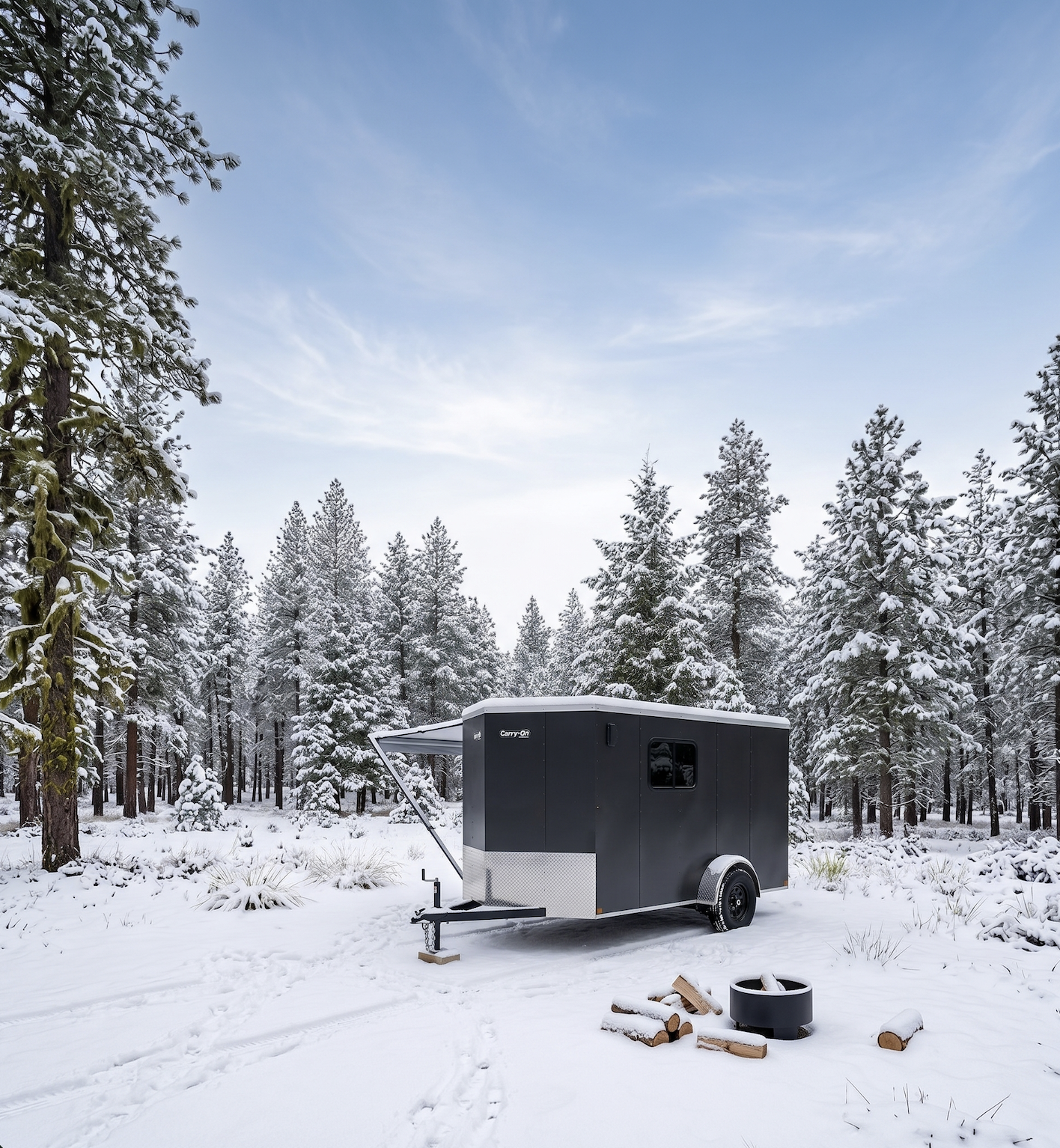
Ready to build a cargo trailer camper just for you? When you're building for one, you have room to make deliberate choices, to prioritize what you actually use, and to build something that fits how you travel rather than how you think you're supposed to travel.

This guide covers how to think through a solo cargo trailer build, which gear holds up in real-world one-person use, and where people typically go wrong the first time.

This post contains affiliate links.If you purchase through these links, a small commission may be earned at no additional cost to you. Thank you for supporting this content. For our full disclaimer, click here.

Shop this post

Solo Sleep Setup

A comfortable sleep is the best perk of a custom cargo trailer camper build. For a solo setup, the main decision is fixed bed versus convertible. Fixed beds are easier to get in and out of and better for under-bed storage. You lose that floor space during the day, which matters in a 6x10 or 6x12 and matters less in a 7x16.

Fixed bed with storage underneath

If you go fixed, build the platform high enough to fit under-bed storage baskets underneath. This is where solo travelers tend to put bulky gear: sleeping bag, extra layers, tools, camping chairs. A 6-inch memory foam mattress on top is firm enough to not feel like camping while being thin enough to keep the bed height manageable. Going thicker than 6 inches in a trailer with 7-foot interior walls starts to feel cramped when you're sitting up in bed.

Convertible sleeper for smaller trailers

If your trailer is on the smaller side or you want floor space for a workspace during the day, a convertible sleeper chair is worth considering. It folds out into a sleeping surface at night and tucks back up during the day. It's not as comfortable as a real mattress, so it’s workable for trips under a week, less so for longer stretches, but the recovered floor space is real.

One thing solo travelers often overlook: you don't need to orient your bed perpendicular to the trailer walls. A diagonal or lengthwise layout can free up a pocket of floor space near the door that becomes your getting-ready area in the morning, which matters more than it sounds when you're changing clothes in 40 square feet.

Kitchen: Build for How You Actually Eat

Solo camping is actually one of the better contexts for cooking real food. Nobody's negotiating over what's for dinner, nobody needs a separate meal, and you're not trying to feed four people from a two-burner stove. You cook what you want, when you want, in whatever quantity makes sense. Build for how you actually cook at home on a Tuesday night and you'll have everything you need.

Cooking surface

For most solo setups, a single-burner propane camp stove or a portable induction cooktop is enough. Two burners is nice but rarely necessary when you're only cooking for yourself. The propane stove works anywhere with no power required. The induction cooktop is cleaner, faster, and produces no fumes, but needs shore power or a well-sized inverter. Pick based on where you'll be camping most.

Counter space matters more than cooking surface for a solo build. Give yourself enough room to prep food without cutting on top of the stove. A 24-inch run of counter on either side of the cooking surface is the minimum that doesn't feel constantly frustrating.

Refrigeration

A 12V refrigerator sized at 30-40 quarts is right for one person for about a week. That covers the basics without eating a quarter of your trailer. If you camp mostly at hookup sites, a compact 120V fridge saves money. The 12V costs more upfront but runs off your battery, which matters when you're solo and don't always want to plan around campground availability.

Water

Running water in a cargo trailer conversion usually means one of two things: a pressurized system with a pump and tank, or a simpler gravity-fed or hand-pump setup. For solo use, the rechargeable sink pump is an underrated middle ground. It sits in any water container, pumps water to a spigot or hose, and charges via USB. No plumbing, no tank, no pump wiring. For a solo traveler who doesn't need a full sink setup, it covers the basics.

Bathroom Solutions

Solo campers building their first conversion often skip the bathroom question entirely, figuring they'll deal with it at campground facilities. That works fine for established campgrounds. It fails the moment you want to camp somewhere without facilities, stay parked for longer than a day trip, or just not walk to a bathroom block at 3am.

You don't need a full wet bath in a solo cargo trailer. What you need is a toilet solution and a way to rinse off after a sweaty day. Both can be handled without dedicating a full room to it.

Toilet options

The Thetford Porta Potti is the most common portable toilet choice for cargo trailer campers and for good reason. It's compact, holds enough waste for several days of solo use, and the sealed tank means no smell when it's closed. For a solo traveler, a Porta Potti stored under the bed or in a corner cabinet and pulled out when needed is a completely reasonable permanent solution — not a stopgap.

The portable toilet is a simpler and cheaper option if the Porta Potti feels like overkill. For weekend trips and occasional use, it works fine.

If you're planning to be off-grid for extended stretches, look at composting toilets. They handle waste without water or a dump station, which is a real advantage when you're parked somewhere remote for a week. The tradeoff is size and cost compared to a Porta Potti.

Showering

A solar shower bag hung from a tree, combined with a shower head with an on/off switch, handles most solo bathing needs without building a dedicated shower stall. The on/off switch matters because it lets you conserve water mid-rinse without turning off the gravity flow. For a built-in shower in a solo trailer, an accordion privacy door can section off a corner of the trailer as a wet area without the weight and complexity of a full shower room door.

Working from Your Cargo Trailer: The Solo-Specific Setup

Remote workers are one of the biggest groups converting cargo trailers right now, and the workspace is where solo builds really diverge from family builds. When it's just you, you can design the trailer around a work setup in a way you can't when someone else needs the same space to eat dinner.

A laptop shelf mounted at desk height on one wall gives you a dedicated workspace that doesn't eat into your living area the way a table does. Pair it with a USB charger port and 12V USB wall outlets at desk level and you have a functional workstation that keeps your gear charged without extension cords running across the floor.

Lighting matters for work in a way it doesn't for pure camping. The warm ambient glow that's nice for evenings is terrible for staring at a screen for six hours. A dedicated cool-white task light at your work area (separate from your general lighting) makes a bigger difference than you'd expect.

Power: Right-Sizing for One Person

Solo travelers use less power than couples or families, but they also tend to camp more off-grid, which means you're more likely to actually need what you've built. The mistake most solo builders make is either massively over-building (400Ah of lithium for someone who charges a laptop and runs a fan) or under-building and running out of power on day three of a week-long trip.

For most solo setups that aren't running an air conditioner, 100-200Ah of lithium is workable. The LiFePO4 battery with Bluetooth lets you monitor charge level from your phone, which is more useful than it sounds when you're trying to decide whether to stay an extra day or drive somewhere with sun. If you want a self-contained option that doesn't require any wiring into the trailer, the Bluetti portable power station is a good starting point for lighter-use solo travelers who are still figuring out their actual power needs before committing to a permanent electrical install.

Heating and ventilation for solo use

A Maxxair roof vent fan is the one thing every cargo trailer conversion needs, solo or not. Hot air exits through the roof, fresh air comes in through windows or the door, and the inside of your trailer stops feeling like a parked car. Run it for a few minutes before bed and you'll sleep noticeably better in warm weather.

For heat, the Mr. Buddy Heater is the practical choice for most solo builds. Size it to your trailer square footage — the standard model handles most 7x14 and 7x16 conversions fine. Keep the Maxxair cracked while it runs. Carbon monoxide is not a risk you manage with confidence; it's one you eliminate with ventilation.

Beyond the Trailer: Get Outdoors

Solo camping has a specific rhythm that couple or family camping doesn't. Mornings with coffee, afternoons reading, evenings watching whatever's happening around camp. The outside setup matters more for solo travelers than most build guides acknowledge.

A hammock between two trees near your campsite covers a lot of that time. It's lighter than a chair, easier to set up, and honestly just more enjoyable than sitting in camp furniture most of the time. Pair it with a portable Bluetooth speaker and battery string lights strung around your awning or camp area and you have an outdoor setup that makes staying in one spot for several days actually pleasant rather than restless.

For when you need actual seating (meals, conversation if you have visitors, working outside) a pair of folding stools take up almost no storage space and handle most situations.

A few layout decisions that matter more for solo builds

Some things play out differently when you're the only person using the space:

  • You only need one side of the trailer optimized. Most solo converters do a galley layout (everything along one wall) and leave the opposite wall open or use it for storage. This gives you a clear path from the door to the bed without navigating around furniture.

  • Door placement changes your layout options significantly. If your cargo trailer has a side door, you have more flexibility on bed orientation than a rear-ramp-only trailer. Think about which wall the door is on before you finalize where the bed goes.

  • Build your storage around your actual stuff. Pull out everything you'd take on a week-long trip before you design your cabinets. The list is always shorter than you expect, and building enormous cabinet space for gear you don't own wastes square footage you'll wish you had back.

  • You will want more counter space than you think. One square foot of prep space feels fine in theory and terrible in practice. If you have to choose between a slightly smaller fridge and more counter, take the counter.

  • Privacy from the outside is worth thinking about early. Windows and a door with a window are nice for light and ventilation, but solo travelers (especially women traveling alone) often wish they'd been more deliberate about window placement and covering options.

Building for yourself

The best solo cargo trailer builds tend to be smaller and simpler than the builder originally planned. The first-timer instinct is to cram in everything you might conceivably want. The second build, if there is one, usually cuts half of it out.

Start with the bed, the kitchen, and the toilet question. Get those three right for how you actually live and the rest follows. Every additional system (built-in shower, elaborate electrical, full cabinetry) is worth adding only if the simpler version caused real problems on actual trips, not in your head while planning.

The nice thing about building for yourself is that nobody else gets a vote. Build what fits how you travel.

Read More
Cargo Trailer Campers Blog Cargo Trailer Campers Blog

Heating Your Cargo Trailer Camper Conversion

Cargo trailers present a specific set of cold-weather challenges. This guide covers everything from the best propane heaters to insulation decisions to the small details, like mattress choice and draft management, that most people overlook until they're already cold.

Cold-weather camping in a cargo trailer is one of those experiences that goes one of two ways. Either you've thought it through, and you wake up comfortable while frost forms on the grass outside. Or you haven't, and you spend a miserable night in a metal box that turned into a refrigerator around midnight. The difference between those two outcomes comes down to preparation.

Cargo trailers present a specific set of cold-weather challenges. The walls are thin steel or aluminum with minimal insulation (unless you've added it yourself). The floor sits just inches above the ground, which is a major source of cold in sub-freezing temperatures. There are no built-in heating systems. And unlike a hard-sided RV, most cargo trailer conversions don't have propane lines plumbed from the factory.

This all just means you need to understand what you're working with and build a heating strategy that matches your camping style. This guide covers everything from the best propane heaters to insulation decisions to the small details, like mattress choice and draft management, that most people overlook until they're already cold.

This post contains affiliate links. If you purchase through these links, a small commission may be earned at no additional cost to you. Thank you for supporting this content. For our full disclaimer, click here.

Shop This Post

Insulation: The Foundation of a Warm Trailer

No heater compensates for poor insulation. A cargo trailer with bare metal walls and no floor insulation loses heat as fast as you can make it, and running a heater all night in an uninsulated space is both expensive and potentially dangerous. If you're still in the build phase, insulation is the highest-return investment you can make for cold-weather camping.

Walls and Ceiling

The most effective approach for cargo trailer walls is a combination of spray foam in the stud cavities and rigid foam board (polyiso or XPS) on the interior face of the walls before your wall paneling goes up. Spray foam seals air gaps, which are as big a source of heat loss as the wall material itself, and rigid foam adds R-value. For the ceiling, the same approach works well. Aim for at least R-13 in the walls and R-19 or higher in the ceiling if your trailer height allows it.

If your trailer is already built out and you can't easily access the wall cavities, focus on what you can reach: add weatherstripping around the door, seal any visible gaps around wiring penetrations or vent openings, and consider adding a thermal curtain just inside the door to create a small vestibule effect that reduces cold air infiltration every time you come and go.

Don’t Ignore the Floor

The floor of a cargo trailer sits close to the ground, and in cold weather, ground temperatures drop faster than air temperatures. An uninsulated floor feels cold underfoot and pulls heat out of the trailer continuously. During a build, rigid foam board under your subfloor is the right move. On an existing build, thick area rugs and layered flooring help, but they're not as effective as doing it right during construction.

Your sleeping setup matters here, too. A 6-inch memory foam mattress creates meaningful insulation between your body and a cold platform. If your bed is built on a platform directly above the floor, as most cargo trailer bed builds are, the foam acts as a thermal barrier as much as a comfort layer. Same idea applies to seating: a thick bench cushion keeps the cold from conducting up through a wooden bench seat into your body while you're sitting.

Propane Heaters: The Most Practical Heating Solution for Cargo Trailer Campers

For most cargo trailer campers, propane is the primary heating fuel. It's available everywhere, it's energy-dense, and it works completely off-grid. The key is choosing the right type of propane heater and using it safely, which means understanding ventilation requirements and having gas detection in place.

Mr. Buddy Heater: The Workhorse

The Mr. Buddy Heater series is by far the most popular portable propane heater among cargo trailer campers, and it's earned that reputation. It's simple, reliable, reasonably safe for indoor use (it has an automatic low-oxygen shutoff), and available in three sizes to match your trailer's square footage.

The standard Mr. Buddy Heater puts out 4,000-9,000 BTU and is the right size for most cargo trailer conversions in the 7x14 to 7x16 foot range. It connects directly to a 1-pound propane canister or, with an adapter hose, to a standard 20-pound tank, which is a much better option for extended trips since 1-pound canisters run out fast when you're heating a space overnight.

The Portable Mr. Buddy Heater is the smaller version, putting out up to 4,000 BTU. It's a better fit for shorter trailers (5x8 or 6x10) or for taking the chill off on a cool shoulder-season evening without heating a full space. Some people keep the smaller version as a backup or use it in their tow vehicle while the larger one handles the trailer.

A third option worth having in your product lineup is this Buddy Heater, which offers similar functionality and is worth comparing on price at time of purchase.

Catalytic Heater: Quieter and Flameless

A catalytic safety heater works differently from a radiant propane heater like the Buddy. Instead of an open flame, it uses a chemical reaction on a catalytic pad to produce heat. The result is a heater that runs silently, produces no visible flame, and generates very low levels of carbon monoxide compared to combustion heaters.

Catalytic heaters are popular with full-time campers and people who run their heater overnight, precisely because of that lower CO output and the absence of a naked flame in a small space. They tend to be a bit less powerful per dollar than the Buddy heaters, but for sustained low-level heat, keeping your trailer at 55 degrees overnight rather than heating it to 70 from cold, they're an excellent option.

One practical note: catalytic heaters take a few minutes to warm up and reach full output. They're not ideal for quickly taking the chill off a cold trailer when you first arrive at camp. Many converters run a Buddy heater to warm the space quickly and then switch to a catalytic for overnight use.

Propane Safety: Non-Negotiable

Any time you're burning propane inside an enclosed space, you need two things: ventilation and gas detection. This is not optional, and it's not overcautious. Carbon monoxide is odorless, and propane leaks can build up silently.

For ventilation: crack a window or run your roof vent fan at low speed whenever a propane heater is running. The Maxxair roof vent fan is ideal for this, it can run on low to provide continuous air exchange without creating a cold draft. Even an inch of open window makes a meaningful difference in CO buildup.

For gas detection: install both a propane gas detector and keep a propane monitor accessible. The hardwired detector mounts low on the wall (propane is heavier than air and sinks to the floor) and sounds an alarm if it detects a leak. The propane monitor gives you a visual read on your tank level, which also helps you avoid running out mid-night in the cold. Both are inexpensive relative to what they protect against.

Getting More From Your Heat Source

Wood Stove Fan

Wood stoves are a growing trend among longer-haul cargo trailer campers who want dry, radiant heat without propane dependency. If you have one, a wood stove fan is one of those small additions that makes a noticeable difference. It sits on top of the stove and uses the temperature differential between its base and top to power a fan blade with no electricity required. The fan pushes warm air off the stove surface horizontally into the room rather than letting it all rise straight to the ceiling.

In a small cargo trailer, the difference between heat pooling at the ceiling and heat circulating at body level is significant, especially when you're sitting or sleeping near floor level. It's a passive device, so there's nothing to plug in, charge, or maintain.

Power for Cold-Weather Systems

Cold weather puts extra demands on your electrical system. Batteries lose capacity in the cold. Lithium iron phosphate (LiFePO4) chemistry handles low temperatures significantly better than lead-acid, and you're likely running more systems simultaneously: the roof fan for ventilation, phone charging, lights, and possibly a heated blanket or electric mattress pad if you're on shore power.

A quality LiFePO4 RV battery with Bluetooth lets you monitor your state of charge from your phone, which matters more in winter when you can't afford to drain the battery overnight. The Bluetooth monitoring feature sounds like a gimmick until you're lying in your sleeping bag at 11pm wondering if you have enough battery to run the fan until morning. Knowing your exact charge level lets you make informed decisions rather than guessing.

For lighting, battery-powered options reduce your electrical load and add warmth to the space without drawing from your main battery bank. Battery string lights strung along the ceiling or walls give a warm, ambient glow that makes a cargo trailer feel genuinely cozy on a cold night, and battery-operated sconce lights mounted on the walls add task lighting near your bed or seating area without any wiring. Warm light temperature (2700K-3000K) makes a surprisingly big psychological difference when it's cold and dark outside.

Managing Wind and Cold Air Infiltration

In cold weather, wind makes everything worse. A trailer that holds heat fine on a calm 40-degree night can feel miserable when the wind picks up to 20mph and pushes cold air through every small gap around the door frame and vent covers.

Door and Window Sealing

Check your cargo trailer door seal every season. The rubber gasket around a trailer door compresses over time and develops gaps, especially at the corners. Replacement door seals are inexpensive and make a real difference. A strip of foam weatherstripping along the door frame costs a few dollars and takes 20 minutes. It's one of the highest-value cold-weather upgrades you can do.

If your conversion has windows you've added, make sure each one seals tightly. Windows that rattle in the wind are leaking air. Thermal curtains or insulating window covers for overnight use add another layer of protection at very low cost.

Using a Canopy as a Windbreak

The Coleman screened canopy isn't just a summer shade structure. In cold weather, set up on the windward side of your trailer, it functions as a windbreak that reduces the wind chill effect on the trailer's walls and door. It's not the same as permanent insulation, but on a gusty cold night, anything that slows the wind before it hits your trailer is working in your favor. Closing the screen panels on the wind-facing sides creates a small protected zone around your door that makes coming and going in the cold much less miserable.

Parking Strategy in Cold Weather

Just as shade parking matters in summer, wind protection matters in winter. When you arrive at a campsite, take a minute to assess the wind direction before you unhitch. Parking with trees, a hillside, or a building on your windward side (the side the wind is coming from) reduces both heat loss and the amount of work your heater has to do. A site that looks identical to the one next door might be significantly warmer just because of what's upwind of it.

Sleeping Warm: The Details That Matter After Dark

Heating systems matter most during the evening when you're awake and active. But once you're in your sleeping bag or under your blankets, your body is generating heat and your needs change. The goal shifts from heating the air to retaining body heat and keeping cold from conducting into you from below.

A thick mattress helps here as much as it does for comfort. The 6-inch memory foam mattress isn't just softer than a 2-inch foam pad. It has six times the insulating material between you and the cold platform beneath you. On a 25-degree night, that difference is noticeable.

Layer your bedding the same way you'd layer clothing: a fitted sheet, a blanket, and a sleeping bag rated below the temperature you expect works better than one heavy comforter. If you wake up too warm you can shed a layer; if you're cold you can pull the sleeping bag over the blanket. Flexibility beats trying to nail the perfect single solution.

Keep a pair of socks, a hat, and a light fleece within reach of your bed. Heat loss from your head and feet accounts for a disproportionate amount of how cold you feel overnight. A wool beanie costs almost nothing and makes more difference than most gear upgrades.

Building a Heating Strategy That Fits Your Setup

Cold-weather cargo trailer camping works well when you treat it as a system rather than a single-product problem. No heater fully compensates for poor insulation. No amount of insulation keeps you comfortable if cold air is pouring in around the door. And even the best hardware setup fails if you're not managing ventilation and gas safety correctly.

For most cargo trailer campers, the practical starting point is this: a Mr. Buddy Heater for main heat, a propane gas detector for safety, a roof vent fan cracked open for ventilation, and a good mattress under your sleeping setup. That combination handles most three-season camping down to around 25-30 degrees without any misery.

From there, you build toward what your climate and camping style demand. If you're pushing into serious winter camping below freezing, add a catalytic heater for overnight use, improve your door seals, address your floor insulation, and upgrade to lithium batteries. Each addition extends your comfort window a little further into the cold.

There's something genuinely satisfying about being warm and comfortable in a trailer while it's cold outside. The sound of wind on the roof hitting a well-insulated, well-sealed space is a lot different from lying there listening to heat escape. Get the basics right and winter camping stops being something you endure and starts being something you look forward to.

Read More
Cargo Trailer Campers Blog Cargo Trailer Campers Blog

How to Keep Your Cargo Trailer Camper Cool in the Heat

Keeping a cargo trailer camper cool is very doable. It takes a combination of smart parking habits, good airflow, and the right gear. Some of these fixes cost nothing. Others are worth the investment.
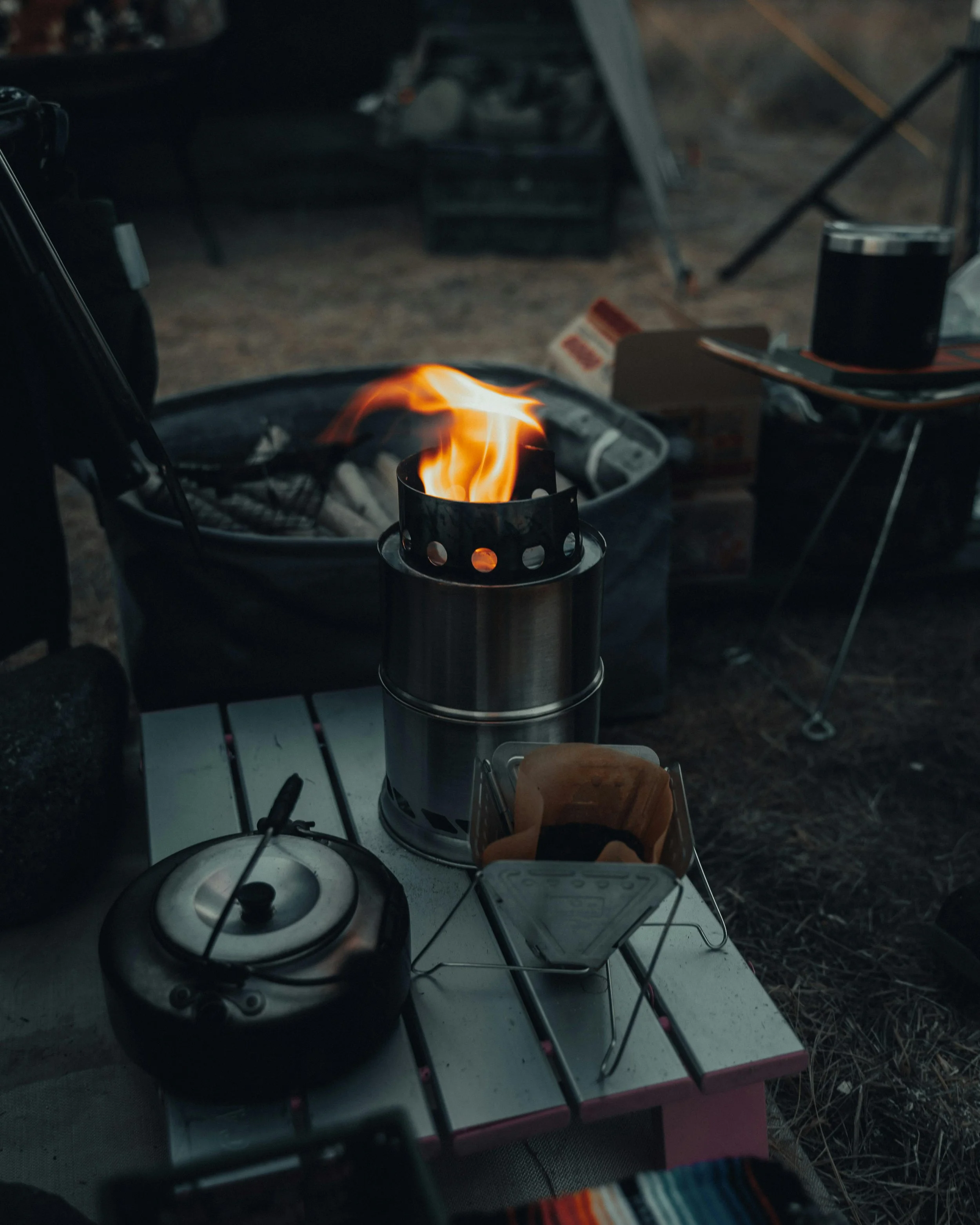
Steel walls. A dark roof. Limited windows. A cargo trailer bakes in the sun in ways that a stick-built RV or a tent shaded by trees does not. If you've ever opened the door to your trailer conversion after it's been sitting in a parking lot for a few hours on a July afternoon, you already know what we're talking about. It's not just uncomfortable — sustained heat is hard on your battery system, your food, your gear, and anyone sleeping inside.

The good news is that keeping a cargo trailer camper cool is very doable. It takes a combination of smart parking habits, good airflow, and the right gear. Some of these fixes cost nothing. Others are worth the investment if you camp in hot climates regularly. Here's a full breakdown of what actually works.

This post contains affiliate links. If you purchase through these links, a small commission may be earned at no additional cost to you. Thank you for supporting this content. For our full disclaimer, click here.

Start Here: Free Ways to Keep Your Trailer Cooler

Before spending anything on gear, there are a few habits and parking decisions that make a bigger difference than most people expect.

Park Strategically in the Shade

This sounds obvious, but it's worth thinking through more carefully than just pulling under the nearest tree. The sun moves throughout the day, so a spot that's shaded at 10am may be fully exposed by 2pm, right when temperatures peak. When you're choosing a campsite or pulling into a parking area, think about where the shade will be in the early-to-mid afternoon, not just when you arrive.

For cargo trailer campers, the roof and the dark metal walls absorb heat fast. Even partial shade, for example a tree blocking the roof but not the sides, makes a measurable difference. South-facing and west-facing walls get the most direct afternoon sun in North America, so if you have a choice, orient your trailer with the narrower end (the tongue end) pointing toward the south or west rather than the broad side.

At established campgrounds, wooded sites cost the same as open sites and are dramatically cooler. If you're camping somewhere you can choose your own spot (BLM land, dispersed camping) prioritize tree cover over proximity to amenities.

Open Everything in the Morning, Close It in the Afternoon

There's a window of time in the morning, usually from sunrise until around 10 or 11am depending on your climate, where the outside air is cooler than the inside of your trailer. That's the time to open every vent, window, and door you have and let the fresh air flush the heat out from the previous day.

Once the outside temperature climbs past what's inside your trailer, flip the strategy: close everything up and keep the hot air out. A closed, shaded trailer holds cooler air better than one with windows open to 95-degree heat. This thermal management is the same principle houses use, and it works in a cargo trailer too.

Use a Reflective Windshield Cover For Your Tow Vehicle and Your Trailer

If your cargo trailer build has any windows (door windows, side windows you've added during conversion) a reflective sunshade cut to fit can reduce radiant heat gain significantly. The same material used in car windshield covers works here. It's cheap, lightweight, and easy to store. Some converters also put reflective insulation (like Reflectix) on the inside of windows they won't be looking through, which doubles as privacy.

Key Upgrades to Keep Cool in Your Cargo Trailer Camper

Airflow Is Everything: Roof Vent Fans

If there's one upgrade that makes the single biggest difference in cargo trailer comfort all year round it's a powered roof vent fan. Stock cargo trailers have no ventilation at all. Adding even one good roof vent fan transforms the inside from an oven to a livable space.

The way a roof vent fan works in a trailer is simple: it pulls hot air out through the roof (hot air rises, so this is the most efficient exit point) and draws cooler outside air in through any open windows or door vents. With a good fan running, you get actual cross-ventilation instead of just stagnant hot air sitting at the ceiling.

Maxxair Fans

The Maxxair Deluxe Roof Vent Fan is a go-to for cargo trailer conversions and one of the most popular choices in the DIY camper community. It fits a standard 14x14 inch roof opening, has multiple speed settings, and runs on 12V power — meaning it works directly off your battery bank with no shore power needed. The smoke-tinted lid version (Maxxair DLX 12V Smoke) adds a bit of UV protection and looks cleaner on a dark roof.

What sets Maxxair fans apart is that they can run in rain without you having to close them. The dome-style lid sits high enough that water doesn't pour in even when it's coming down hard. For camping in variable weather, that matters. You don't want to wake up at 2am in a rainstorm to manually close your vent.

FanTastic Vent Fan

The FanTastic RV Roof Vent Fan is another strong option that's been popular in the RV world for years. It's slightly lower profile than the Maxxair and available with a thermostat feature that automatically adjusts fan speed based on interior temperature. If you're away from your trailer during the day and want the fan managing heat on its own, the thermostat version is worth considering.

RVLOVENT and Heng's Industries Options

For builders watching the budget, the RVLOVENT Roof Vent Fan and Heng's Industries Zephyr I are solid mid-range options. Both fit the standard 14x14 opening, run on 12V, and get good reviews for reliability. They won't have every feature of a Maxxair, but they move significant air and will make your trailer noticeably cooler on a hot day.

Small Fans for Targeted Airflow

A roof vent fan handles the big picture, but a small clip-on or desk fan pointed at wherever you're sitting or sleeping makes a big difference in personal comfort. The battery-powered clip fan is handy for daytime use when you're parked without shore power, and the 12V mini fan runs directly off your trailer's battery system for continuous overnight use without draining a separate battery pack.

When Fans Aren't Enough: Air Conditioning Options

There are parts of the country, and times of year, where fans and shade management just aren't enough. Phoenix in August. South Texas in June. The Florida panhandle pretty much any time from May through September. If you camp in serious heat, air conditioning isn't a luxury. Here's how it works in a cargo trailer context.

Window AC Unit

A standard window AC unit is the most common air conditioning solution for cargo trailer campers, and for good reason: it's cheap, it's effective, and installation is straightforward. The window AC unit can be mounted through a wall or through a roof baggage hatch opening (a popular approach in the conversion community — see AC vented through RV baggage hatch) rather than cutting a window opening.

The limitation is power. A 5,000-8,000 BTU window unit draws 500-900 watts and needs a 120V shore power connection to run. It's not an off-grid solution. But if you're camping at established campgrounds with 30-amp hookups, a window unit keeps a cargo trailer very comfortable even in serious heat.

Sizing suggestion: a 5,000 BTU unit is enough for trailers up to about 150 square feet. Most cargo trailer conversions fall in that range or smaller, so you don't need to oversize.

Haier AC Unit

The Haier AC unit is a compact, reliable option that works well in the tight confines of a cargo trailer conversion. It's quieter than some budget window units and the compact dimensions make it easier to mount cleanly without a huge exterior footprint.

LETO Mini Split

For serious builders doing a high-end conversion, a LETO mini split AC is worth considering. Mini splits are more efficient than window units, significantly quieter, and don't require a window or hatch opening, just a small hole through the wall for the refrigerant lines. The tradeoff is installation complexity and cost. You'll need a 30-amp shore power connection or a very robust solar and battery setup, and installation is more involved than dropping a window unit into an opening.

That said, if you're building a trailer you plan to spend significant time in and want it to feel like an actual living space rather than a modified box trailer, a mini split is the AC solution that gets you there.

Shade Structures Outside the Trailer

One underrated cooling strategy: reduce how much direct sun hits the trailer in the first place. The Coleman screened canopy sets up quickly and creates a shaded zone over your door and outdoor living area. Beyond comfort for outdoor time, a canopy blocking the sun from hitting your trailer's south or west-facing wall measurably reduces how hot the interior gets. It's not a substitute for a roof vent or AC, but it's a cheap and useful addition to your cooling toolkit, and it doubles as a bug-free outdoor hangout space.

Don't Overlook Insulation During Your Build

If you're still in the planning or active build phase of your conversion, insulation is your highest-leverage move for temperature control, both in summer and winter. A well-insulated trailer holds cool air in and keeps hot air out in a way that no fan or AC unit can compensate for if the walls are bare metal.

For cargo trailers, spray foam in the cavities combined with rigid foam board on the walls is the most effective approach. The roof especially matters, that's where radiant heat enters most aggressively in summer. Don't skimp on roof insulation even if you cut back elsewhere.

If your trailer is already built out and you didn't insulate as well as you'd like, Reflectix or similar reflective insulation can be added behind wall panels in some areas, and ceiling insulation can sometimes be improved by accessing the space above your headliner. It's not as good as doing it right during the build, but it helps.

Putting It All Together

Cooling a cargo trailer camper is a layered problem. No single solution handles everything, but combining a few of these approaches gets you a long way. For most people, the priority order looks like this:

  • Insulate well during the build. This pays dividends year-round

  • Add a roof vent fan. This is the single best upgrade for an existing build

  • Park smart. Shade and trailer orientation cost nothing and matter more than most people realize

  • Use window management. Open in the cool morning, close when outside air heats up

  • Add a small clip or 12V fan for personal comfort at your sleeping and sitting spots

  • Install AC if you camp in serious heat regularly and have shore power access

Even in hot climates, a well-ventilated, well-insulated cargo trailer with a good roof fan is comfortable for most of the year. The AC becomes relevant when temperatures stay above 90 overnight, or if you're camping somewhere that doesn't cool down much after dark. Know your climate, build accordingly, and adjust as you go.

Summer camping in a cargo trailer gets a bad reputation because a poorly ventilated metal box in the sun is genuinely miserable. But get the airflow right, manage your parking, and add cooling gear that fits your setup — and it's just camping.

Read More
Cargo Trailer Campers Blog Cargo Trailer Campers Blog

Kitchen Setup Tips for Your Cargo Trailer Camper Conversion

This guide covers every major appliance category, what works in real-world use, and how to pick the right gear for your cargo trailer camper conversion.

Cooking in a cargo trailer camper is one of those things that sounds limiting until you actually do it. With the right setup, you can make real meals (not just instant ramen and sad granola bars) in a small space. The kitchen is often the last thing people plan in a conversion build and the first thing they wish they'd thought through more carefully. This guide covers every major appliance category, what works in real-world use, and how to pick the right gear for how you actually camp.

This post contains affiliate links. If you purchase through these links, a small commission may be earned at no additional cost to you. Thank you for supporting this content. For our full disclaimer, click here.

Shop This Post

Cooking: Your Options and When Each One Makes Sense

How you cook depends on two things: how you store energy (propane, shore power, solar/battery) and how much counter space you have. Most cargo trailer campers end up running a hybrid setup — one primary cooking method and one backup. Here's how each option stacks up.

Propane Camp Stove

A two-burner propane stove is the workhorse of most cargo trailer kitchens. It's fast, familiar, and works completely off-grid with no battery or shore power required. If you're camping in spots without hookups such as forest service roads, BLM land, state park primitive sites, propane is often your most reliable option.

The propane camp stove is a straightforward pick for conversions where you want a dedicated countertop burner that performs like a home range. Look for one rated at 10,000 BTU or higher per burner if you plan to do any actual cooking rather than just reheating things.

A few practical notes for cargo trailer builds: propane stoves produce moisture and carbon monoxide, so ventilation matters. If your conversion has a roof vent fan (and it should) position your stove underneath it or nearby. Never use a propane stove in a fully sealed space.

Portable Induction Cooktop

If your cargo trailer has shore power hookups or a solid solar and battery system, a portable induction cooktop is a genuinely excellent cooking surface. Induction is faster than propane for most tasks, produces no fumes, and generates less ambient heat in an already warm trailer.

The portable induction cooktop is a single-burner unit that sits flat on any counter, plugs into a standard 120V outlet, and draws around 1,800 watts at full power. That power draw is the main limitation — you need reliable shore power or a well-sized inverter and battery bank to run it consistently. For campgrounds with 30-amp hookups, it's completely practical. For off-grid boondocking, it'll drain your batteries fast.

One overlooked benefit for cargo trailer builds: induction won't scorch a wood countertop the way a propane burner can if something goes wrong. If your build has butcher block or plywood counters, that's worth considering.

Coleman Camp Oven

Most compact camper kitchens skip the oven entirely, which means no baked potatoes, no cornbread, no roasted vegetables. The Coleman camp oven solves that without requiring a built-in range. It's a folding, collapsible oven that sits on top of a propane burner and uses reflected heat to bake from below. It's not as precise as a home oven, but it works surprisingly well for simple baking and roasting.

For cargo trailer campers who cook real food and spend extended time at one site, this is a standout addition. It stores flat and takes up almost no space when not in use. Pair it with your propane stove and you have a full cooking setup that works anywhere.

Camping Cookware Kit

Good cookware makes every cooking method work better. A camping essentials cookware kit gives you a matched set of pots, pans, and lids that nest together compactly, which matters a lot when cabinet space in a cargo trailer is limited. Look for hard-anodized aluminum or stainless steel options, as these handle both propane and induction surfaces and hold up to the kind of abuse that comes with camping.

If you already have a good nonstick pan at home that's on its way out, this is the right time to replace it with a camping-specific set rather than cramming full-sized home cookware into your trailer build.

Refrigeration: The Most Important Appliance Decision in Your Build

Refrigeration is where most cargo trailer builders spend the most time agonizing — and rightly so. The wrong fridge choice can drain your battery bank overnight, take up too much space, or just not keep food cold enough in Texas in August. Here's a breakdown of the main options.

12V Refrigerator

A 12v refrigerator is the gold standard for off-grid cargo trailer campers. Unlike a standard household fridge that runs a compressor on 120V AC power, a 12V fridge runs directly off your battery bank and is designed for the kind of stop-and-go use that kills regular fridges over time. They're efficient, they keep consistent temperatures, and they work whether you're plugged into shore power or parked in the middle of nowhere.

The tradeoff is cost. 12V compressor fridges run significantly more than a cheap countertop cooler or a small household unit. But if you're doing extended off-grid trips, the efficiency savings and the fact that your food won't spoil are worth the upfront investment.

Sizing tip: a 30-40 quart 12V fridge is right for one or two people for a week. Go up to 50-60 quarts if you're feeding more people or don't want to shop every few days.

Frigidaire Compact Fridge

For cargo trailer campers who primarily camp at established campgrounds with shore power (think state parks, KOAs, RV parks) a Frigidaire compact fridge is a practical, budget-friendly option. These are standard 120V mini fridges. They use more power than a 12V compressor fridge, but when you're plugged in, that doesn't matter.

The advantage is price and capacity. You can get a quality 3.2 cubic foot Frigidaire compact for a fraction of what a 12V fridge costs, and the interior layout is more like a real fridge with actual shelves, a door compartment, and a small freezer section.

The disadvantage is that it's useless off-grid unless you have a large inverter and serious battery capacity. Know your camping style before you commit.

Retro Fridge for Style-Forward Builds

If the aesthetic of your cargo trailer conversion matters to you, and for a lot of converters, it really does, a fun retro appliances fridge can make your kitchen feel like an actual designed space rather than a utilitarian box. These compact fridges come in colors like cream, red, and mint green and have a distinctly mid-century look that works really well in wood-paneled, boho, or vintage-inspired trailer interiors.

They run on 120V shore power like the Frigidaire, so they're best suited for campers who plug in regularly. But if your build has a strong visual identity, matching your fridge to your interior design is a legitimate consideration, especially if you're building something you plan to photograph and share.

Small Appliances That Earn Their Cabinet Space

Counter space and cabinet space in a cargo trailer are finite. Every appliance that lives in your kitchen should justify its footprint. These two earn it every time.

Retro Microwave

A microwave in a cargo trailer is more useful than it sounds. Reheating leftovers, cooking frozen vegetables, softening butter, warming tortillas, these are the things that make the difference between cooking feeling like a chore and actually being enjoyable on a trip. The retro microwave pairs visually with the retro fridge and keeps the kitchen looking intentional rather than cobbled together from whatever was on sale.

Microwaves run on 120V shore power, so this is another appliance that works best at campgrounds with hookups. At 700-900 watts, a microwave is more manageable than an induction cooktop on an inverter if you have solar, but plan accordingly.

Electric Tea Kettle

An electric tea kettle is one of those appliances that seems unnecessary until the first morning you're waiting 12 minutes for a camping pot of water to come to a boil on a propane burner while you're barely awake. A kettle boils water in under three minutes, which matters for coffee, tea, oatmeal, instant soups, and ramen — basically the entire category of 'fast camp food.'

At around 1,500 watts, a kettle is power-hungry on shore power but manageable. For off-grid use, you'll heat water on your propane stove instead. Keep the kettle for campground stays and consider it one of the small luxuries that makes your trailer feel like a real home.

A Few Kitchen Layout Tips Worth Knowing Before You Build

Before you start cutting countertops and mounting cabinets, a few layout decisions will save you headaches later:

  • Put your propane stove near a vent or window. Ventilation isn't optional, it's a safety issue. Plan the stove location around your roof vent, not the other way around.

  • Give your fridge its own dedicated cabinet with ventilation clearance. All compressor fridges (12V or 120V) need airflow around the condenser coils. A fridge stuffed into a sealed cabinet will work harder, run hotter, and fail sooner.

  • Build in more counter space than you think you need. Two square feet of prep space sounds fine until you're trying to chop vegetables with a cutting board that keeps sliding off a 10-inch ledge.

  • Think about where you'll keep your cookware kit when you're driving. Pots and pans rattling around in a cabinet for six hours on the highway is annoying. A drawer latch or a bungee across the cabinet door goes a long way.

  • If you're running both propane and electric appliances, plan your propane lines and your 120V outlets before the walls go up. Retrofitting either one after the fact is always more work than doing it during the build.

Building a Kitchen That Actually Works

The best cargo trailer camper kitchens aren't the most expensive or the most elaborate, they're the ones built around how the owner actually cooks and camps. A solo boondocker who mostly eats one-pot meals needs a completely different setup than a family that pulls into a state park every weekend and wants to cook real dinners.

Start with the fridge decision, since that choice affects everything else (power system, cabinet layout, whether you need shore power). Then nail down your cooking method based on whether you'll have power hookups or not. Fill in the rest (microwave, kettle, cookware) based on what you actually use in your home kitchen on a weeknight. If you never use your rice cooker at home, you won't use it in a trailer either.

Get the basics right, and your trailer kitchen will feel surprisingly normal. Get it wrong and you'll be rebuilding it within a year. Either way, the food tastes better when you're parked somewhere with a good view.

Read More
Cargo Trailer Campers Blog Cargo Trailer Campers Blog

Best Cargo Trailer Camper Gear for Families (That Actually Gets Used)

The right gear makes all the difference when cargo trailer camping with kids. Here’s our round up of the top items to put on your packing list.
Camping with kids is a lot. You're managing snacks, sunscreen, a missing shoe, and somehow you're also supposed to be relaxing. The right gear won't make it perfect, but it does make the difference between a trip everyone remembers fondly and one nobody wants to repeat.

These are the outdoor items worth actually packing.

This post contains affiliate links. If you purchase through these links, a small commission may be earned at no additional cost to you. Thank you for supporting this content. For our full disclaimer, click here.

About Cargo Trailer Camping Gear for Families

What outdoor gear do families need for camping? Beyond the basics (food, water, first aid…), families tend to get the most mileage out of shade, seating, lighting, and something for the kids to do that doesn't involve a screen. The items below cover all four.

What camping games are good for families? Cornhole and bocce are the two that get pulled out most consistently. They work for a range of ages, don't require explanation, and pack flat. Glow-in-the-dark bocce extends the game past sunset, which kids love.

The Gear List

1. Glow-in-the-Dark Bocce Set

Shop on Amazon →

Regular bocce is good. Bocce you can play after dark is better. The glowing balls charge in sunlight and stay bright long enough for a full game after dinner, which is exactly when you need something to do while the fire burns down. Works for adults and kids who are old enough not to throw them at each other.

2. Cornhole

Shop on Amazon →

Cornhole is one of those things that sounds boring until you're three rounds in and it's suddenly a family tournament with made-up rules and trash talk. It folds flat for travel and doesn't need any setup beyond finding a flat-ish patch of ground.

3. Portable Projector for Movie Nights

Shop on Amazon →

This one gets skeptical looks until the first time you actually use it. Hang a sheet on the side of your cargo trailer camper, connect a phone or tablet, and you have an outdoor movie night. Kids go crazy for it. It's also a solid backup plan if the weather turns and everyone's stuck inside with nothing to do.

4. Coleman Screened Canopy

Shop on Amazon →

Shade is underrated until you don't have it. A screened canopy does two things at once: blocks the sun and keeps the bugs out of your food. If you're camping somewhere with mosquitoes (most places, in summer), this earns its footprint in the truck bed.

5. Comfortable, Portable Chairs

Shop on Amazon →

Bad camp chairs are one of those things you tolerate once and then spend the rest of the trip thinking about. These pack down small and actually support a person's back. Bring one per adult, minimum, becausee nobody wants to fight over the good chair.

6. Outdoor Rug

Shop on Amazon →

An outdoor rug sounds optional until you've spent a trip watching kids track mud and pine needles into your cargo trailer camper. It defines a clean zone outside the trailer or tent, gives little kids somewhere to sit and play, and rolls up in about 30 seconds.

7. Foldable Camping Table

Shop on Amazon →

Surface area is always the problem at a campsite. You need somewhere to put food, drinks, the sunscreen you're constantly reapplying, the cards, the bug spray. A foldable table that actually fits in the truck or camper is worth having.

8. String Lights

Shop on Amazon →

Functional and nice-looking, which is a rare combination in camping gear. String lights make the campsite feel like a home base rather than a parking spot. They're also bright enough to actually see by, which matters when you're trying to find something in the dark.

9. Battery-Powered Lanterns

Shop on Amazon →

Headlamps are fine. Lanterns are better when you're sitting around with the family and don't want a beam in someone's face every time they look up. Battery-powered means no fuel to mess with.

10. Portable Bluetooth Speaker

Shop on Amazon →

Music at a campsite is one of those things that improves everyone’s mood. This one is compact and weatherproof enough for camping conditions. Worth the bag space.

11. Hammock

Shop on Amazon →

A hammock hung between two trees at a campsite is the fastest way to keep a kid busy for 45 minutes while you drink your coffee. Adults like them, too. They pack to the size of a softball and weigh almost nothing.

12. Camping Essentials Cookware Kit

Shop on Amazon →

A compact cookware kit that nests together and actually fits in a bag makes meals easier and cleanup faster, which is a must with kids. Not glamorous, but one of the more practical things on this list.

13. Soft-Sided Cooler

Shop on Amazon →

Hard coolers are great for base camp. A soft-sided cooler is what you grab when you're hiking to the lake or walking around a campground. Lighter, more packable, and keeps things cold for a full day with enough ice.

14. Folding Cup Holders

Shop on Amazon →

Spilled drinks are a camping constant. Clip-on folding cup holders attach to chairs and camp tables and prevent about 80% of them. Small, cheap, and one of those things you forget to pack and then miss the entire trip.

15. Electric Tea Kettle

Shop on Amazon →

If you have shore power or a battery setup at your campsite, a small electric kettle is faster and cleaner than heating water on a camp stove. Coffee, oatmeal, instant noodles for the kids… it gets used constantly.

The Short Version

You don't need all of this. But if you're building out a family camping kit from scratch, start with the things that keep kids occupied (bocce, cornhole, projector), the things that make evenings comfortable (lights, chairs, canopy), and a cooler that actually travels with you. The rest is nice to have.

Read More
Cargo Trailer Campers Blog Cargo Trailer Campers Blog

The Best Trailer Hitch Locks for Cargo Trailer Camper Conversions

The coupler is the metal fitting at the front of your trailer's tongue that clamps down over the ball on your tow vehicle's hitch. It's also the most common point of attack for trailer theft.
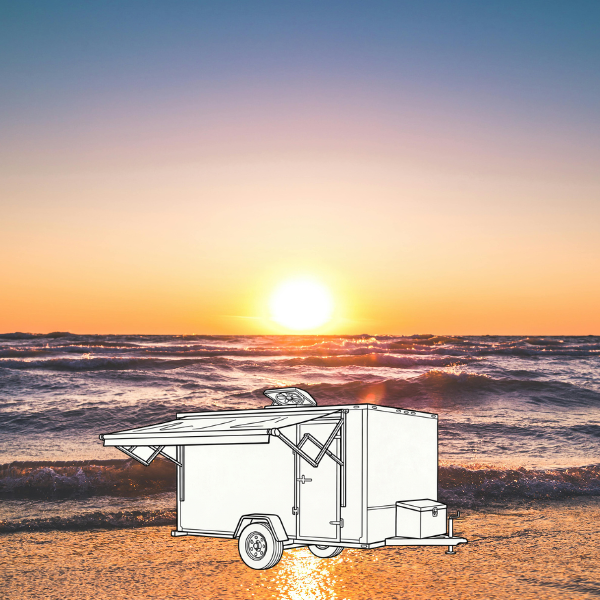
You spent months converting your cargo trailer into the perfect camper. The last thing you want is to walk outside and find that it’s been stolen.

A quality trailer hitch lock is one of the simplest, most affordable ways to protect your camper. But with dozens of options out there, knowing which lock fits your setup, and actually works, takes a little homework.

This guide breaks down everything you need to know: the terminology, how to measure your coupler, and which locks are best suited for different needs and budgets.

This post contains affiliate links. If you purchase through these links, a small commission may be earned at no additional cost to you. Thank you for supporting this content. For our full disclaimer, click here.

Key Trailer Lock Terms Every Cargo Trailer Camper Owner Should Know

What Is a Trailer Coupler?

The coupler is the metal fitting at the front of your trailer's tongue that clamps down over the ball on your tow vehicle's hitch. When you hook up to tow, the coupler is what keeps your trailer physically attached to your truck or SUV. It's also the most common point of attack for trailer theft, because thieves can drop a coupler onto a ball hitch in seconds and drive away.

Couplers come in different styles (adjustable, lunette rings, pintle hooks) but for most cargo trailer camper conversions, you're working with a standard ball coupler, sometimes called a straight-tongue coupler or A-frame coupler.

What Is a Coupler Lock?

A coupler lock is a device that physically blocks the coupler from being connected to a hitch ball, or locks the coupler's latch so it can't open. Think of it like a steering wheel club, but for your trailer hitch. Even if someone has a truck with the right ball size, they can't attach it and drive away.

What Is a Receiver Hitch Lock or Hitch Pin Lock?

A receiver hitch lock, sometimes called a hitch pin lock, works differently from a coupler lock. Instead of locking the coupler on the trailer, it locks the hitch receiver on your tow vehicle. This prevents someone from removing your hitch ball mount, which is useful when your truck is parked at a trailhead or campground without the trailer attached. It can also be used as a secondary security measure alongside a coupler lock.

Ball Size vs. Coupler Size: What's the Difference?

Your trailer coupler is sized to fit a specific ball diameter. The three most common sizes in the U.S. are 1-7/8 inch, 2 inch, and 2-5/16 inch. Cargo trailer conversions most commonly use a 2-inch ball, though heavier builds may require a 2-5/16 inch setup. The coupler size and your lock size must match. This is the single most important measurement you'll need before buying any lock.

How to Find and Measure Your Coupler Diameter

Getting this wrong means buying a lock that either won't fit or will rattle around uselessly. Here's how to measure correctly:

  • Look for a stamped or engraved number on the coupler housing itself. Most manufacturers stamp the ball size directly onto the coupler. Look for "2 inch," "2-5/16," or a number like "2 5/16" near the latch mechanism.

  • Check your trailer's paperwork. The original title, bill of sale, or owner's manual for the trailer should list the coupler size.

  • Measure it yourself. Use a caliper or a simple ruler to measure the inner diameter of the coupler socket (the hollow opening that drops over the ball). Measure across the widest point of the opening. A 2-inch coupler will measure approximately 2 inches across the interior.

  • When in doubt, bring your lock to the trailer before you buy. Many hardware stores and camping supply shops let you test the fit.

One important thing to consider: some coupler locks are designed to be "universal" and fit multiple sizes via an adjustable mechanism. These are convenient but sometimes offer less precise security than a size-specific lock. If your coupler size is confirmed, opt for a lock designed specifically for that diameter when possible.

Also note: cargo trailer conversions sometimes have non-standard or older couplers, especially on used trailers. If the coupler looks unusual (offset, oversized, or part of a gooseneck setup) you may need a specialty lock like a Proven Industries model (more on those below) designed for heavy-duty applications.

The Best Trailer Hitch Locks for Cargo Trailer Campers

Below are the top picks from your options, organized by what kind of converter you are: from the weekend warrior on a budget to the full-timer who needs serious security.

Best Budget Pick: Master Lock Universal Trailer Hitch Lock

If you're just getting started with your cargo trailer conversion and want solid basic protection without breaking the bank, the Master Lock Black Universal Size Trailer Hitch Lock is a reliable entry point. It's designed to fit multiple coupler sizes and uses a weatherproof design to hold up against the elements.

Best for: Weekend campers, festival-goers, or anyone who stores their trailer at home in a relatively low-crime area. It deters the opportunistic thief but isn't built to withstand a determined attack with bolt cutters.

Best Everyday Reliable Lock: Master Lock 2866DAT

The Master Lock 2866DAT Trailer Hitch Lock is a step up in build quality and is one of the most widely used locks among cargo trailer owners for good reason. It's simple to use, durable, and fits most standard couplers. The integrated weatherproof cover protects the keyway from rain and road grime, which matters if you're parking your rig outside long-term.

Best for: Full-time and part-time cargo camper owners who want a set-it-and-forget-it lock that works reliably season after season.

Best Universal Fit: Master Lock 389DAT Universal Trailer Coupler Lock

For those with an unusual coupler size or who tow multiple trailers, the Master Lock 389DAT Universal Trailer Coupler Lock is built to fit a wider range of coupler openings. Its adjustable design means one lock can work across different trailer setups, which can be useful if you own more than one trailer or are still in the build-out phase of your conversion and haven't finalized your coupler.

Best for: Camper converters who own multiple trailers, or anyone towing a borrowed or rental trailer alongside their own rig.

Best Heavy-Duty Option: Proven Industries Model 2516

When your cargo trailer camper conversion is a serious, fully built-out tiny home on wheels with solar, a water system, a full bed, and thousands of dollars in renovations, a basic padlock-style coupler lock isn't enough. The Proven Industries Model 2516 Heavy-Duty Trailer Coupler Lock is built from hardened steel and is designed to resist cutting, drilling, and prying. It's the gold standard for high-value trailers and is notably more expensive, but the cost is worth it when your trailer is your home away from home.

Best for: Full-timers, trailer home conversions, and anyone who has a substantial investment in their build and stores the trailer in public or semi-public locations.

Best for 2-Inch Couplers: Proven Locks Model S175

The Proven Locks Model S175: 2 inch Trailer Hitch Lock is purpose-built for the 2-inch coupler size, which is by far the most common coupler size on cargo trailers used for camper conversions. This lock covers the coupler entirely rather than just blocking the latch, making it much harder for a thief to attack the lock directly.

Best for: Cargo trailer conversions with a standard 2-inch coupler that are stored in campgrounds, storage facilities, or anywhere with public access.

Best for All-Weather / Coastal Use: CURT 23519 Stainless Steel Hitch Lock

Saltwater air, coastal humidity, and constant outdoor exposure can corrode a standard steel lock surprisingly fast. The CURT 23519 Stainless Steel Hitch Lock is built from stainless steel to resist rust and corrosion, making it the right call if you camp near the coast, in rainy climates, or if your trailer sits outside year-round.

Best for: Pacific Northwest campers, coastal van-lifers who also tow, and anyone who keeps their trailer parked outside in wet or humid environments.

Best Hitch Pin / Receiver Lock: Rhino USA Locking Trailer Hitch Pin

The Rhino USA Locking Trailer Hitch Pin isn't a coupler lock, it's a receiver lock that secures your hitch ball mount to your truck's receiver. This is the piece you want when your truck is parked at a trailhead, job site, or campground without the trailer, preventing someone from stealing your ball mount. It's also a great secondary layer of security even when the trailer is attached.

Best for: Anyone who leaves their hitch ball mount attached to their truck. Pairs well with a coupler lock for a two-layer security setup.

Best Mid-Range Value: TowSmart 5/8" Trailer Receiver Hitch Lock

The TowSmart 5/8" Trailer Receiver Hitch Lock hits a sweet spot between affordability and durability. It's a hitch pin lock (not a coupler lock) that uses a 5/8-inch diameter shank, the standard size for class III and class IV hitches, which are the most common on trucks and SUVs used to tow cargo trailers.

Best for: Anyone with a class III or IV hitch receiver who wants an affordable, no-fuss lock for their ball mount.

Best Premium Coupler Lock: Trimax UMAX100 Universal Trailer Lock

The Trimax UMAX100 Premium Universal Trailer Lock is a step above most consumer-grade locks with a high-security disc-style padlock that's harder to cut or pick than standard pin tumbler locks. It fits most coupler sizes and is built with marine-grade weather seals.

Best for: Security-conscious campers who want premium protection without going full industrial. Great for cargo trailer campers stored in RV parks, storage lots, or shared driveways.

Best for 2-5/16" Couplers: AMPLock U-BRP2516 Heavy Duty Coupler Lock

If your cargo trailer has a heavier-duty 2-5/16-inch coupler, common on larger box trailers and gooseneck-adjacent setups, the AMPLock - U-BRP2516 Heavy Duty Trailer Coupler Lock is purpose-built for that size. It offers heavy-duty steel construction with a boot-style design that entirely covers the coupler socket, blocking both access to the ball and any leverage points for an attacker.

Best for: Larger cargo trailer conversions with 2-5/16-inch couplers, especially full-time or semi-permanent builds.

How to Layer Your Trailer Security

No single lock is foolproof. The goal of trailer security isn't to make theft impossible, it's to make your trailer a significantly harder target than the one parked next to it. Here's a simple layered approach for cargo trailer camper owners:

  • Use a coupler lock as your primary defense. The coupler lock should always be in place when your trailer is parked and unhitched.

  • Add a hitch pin lock to your tow vehicle's receiver. This prevents theft of your ball mount and adds an extra deterrent.

  • Consider wheel chocks or a wheel boot for extended stays at campgrounds or storage facilities.

  • Use a GPS tracker inside your trailer. Several small, subscription-based trackers can be hidden in a wall cavity or under a cabinet during your build. If the trailer moves without you, you'll know.

  • Add GPS Tracking Equipped stickers as an additional deterrent

  • Document your trailer's VIN and photograph your build. In the event of theft, this dramatically improves the odds of recovery.

Quick Reference: Which Lock Is Right for You?

Here's a fast summary to help you match your cargo trailer camper style to the right hitch lock:

Final Thoughts

Securing your cargo trailer camper doesn't have to be complicated or expensive. Start by confirming your coupler size. Check for a stamped marking on the housing, consult your trailer's paperwork, or simply measure the inner diameter. Once you know that number, picking the right lock is straightforward.

For most cargo trailer conversions with a standard 2-inch coupler, the Master Lock 2866DAT is a reliable, affordable first lock. If you've put serious time and money into your build, step up to the Proven Industries 2516 or Trimax UMAX100 for a higher level of protection. Either way, pairing a coupler lock with a hitch pin lock on your tow vehicle gives you a layered defense that most opportunistic thieves won't bother with.

Your conversion took creativity, sweat, and investment. Protect it with a lock that you can trust.

Read More
Cargo Trailer Campers Blog Cargo Trailer Campers Blog

Awning inspiration for your cargo trailer camper conversion

Adding an awning to your cargo trailer camper is one of the simplest upgrades that delivers the biggest impact. Whether you’re boondocking in the desert, camping in a rainy mountain town, or setting up at a lakeside campground, the right awning instantly expands your living space and increases comfort.

Adding an awning to your cargo trailer camper is one of the simplest upgrades that delivers the biggest impact. Whether you’re boondocking in the desert, camping in a rainy mountain town, or setting up at a lakeside campground, the right awning instantly expands your living space and increases comfort.

But not all awnings are created equal.

From manual roll-out systems to 270-degree batwing awnings, DIY tarp setups to fully mounted aluminum frame models, choosing the best awning for your cargo trailer camper depends on how you travel, where you camp, and how much coverage you actually need.

If you’re researching the best types of awnings for a cargo trailer camper, this guide will walk you through:

  • The most popular awning styles for trailer conversions

  • The pros and cons of each type

  • What to consider before mounting one

  • Real-world inspiration to help you design your outdoor setup

Whether you’re building a stealth urban rig or a full off-grid adventure camper, understanding your awning options can dramatically improve both functionality and aesthetics.

Why an Awning Is One of the Best Cargo Trailer Camper Upgrades

Cargo trailer campers are compact by design. Interior square footage is limited, and in many builds, there isn’t room for standing, cooking, and relaxing all at once. An awning changes that instantly by creating a shaded, weather-protected outdoor room.

The right awning can:

  • Protect your entry door from rain

  • Reduce interior heat gain in hot climates

  • Create a covered cooking area

  • Provide shade for pets

  • Offer privacy when paired with side walls

  • Extend usable space by 30–100+ square feet

For many builders, an awning becomes the centerpiece of their campsite setup.

But selecting the wrong type can lead to frustration — especially if it’s difficult to deploy, catches wind easily, or doesn’t match your travel style.

What to Consider Before Choosing an Awning

Before diving into specific awning types, it’s important to think strategically about how you use your cargo trailer camper.

Ask yourself:

  • Do you move daily, or stay in one spot for several days?

  • Do you camp in windy areas?

  • Do you prioritize fast setup or maximum coverage?

  • Is your trailer aluminum or steel framed?

  • Do you want a permanent mount or removable option?

  • How much weight can your trailer roof support?

Awnings vary significantly in weight, mounting method, durability, and setup time. A lightweight manual awning might be perfect for weekend trips, while a heavy-duty batwing system may suit extended overlanding adventures.

Mounting options also matter. Many cargo trailers require custom brackets or reinforcement plates, especially if you’re attaching to thin aluminum skin.

Here are top examples of awning options from real cargo trailer camper builds, so you can draw some inspiration.

Smart DIY awning

A simple tarp and EMT poles create this DIY awning. This trailer had an awning rail already so the builder used RG59 cable with the tarp around it to fit perfectly.

Half umbrella, full function

Check out this cost effective and smart solution. That’s a half umbrella attached with quick fist clamps. It is 10’ across and therefore gives 5’ shade over that window.

Residential awnings work, too.

From the smart builders: “We ended up putting a residential awning on our CTC. I have it attached to the ladder rack as there was not enough room above the door to attach it. We have had it deployed in light rain and wind without any issues but would not recommend it to stay our in heavy winds or gusts or heavy rains.”

Check out the install video below.

Make a DIY awning with a tarp

Mesh tarp, EMT metal conduit and adjustable flag pole brackets make up this smart and cost-conscious DIY.

Reclaim an awning from an old RV

This builder says, “the side awning is one of the best investments I made, a manual setup off another trailer.” Reduce, reuse, recycle.

Go for a factory install

Many cargo trailer dealers will offer customizations for an additional fee. Ask about awnings when you order.

Check out the RecPro brand

RecPro sells manual awnings that are high quality and highly rated. Shop the RecPro RV Awning Assemblies and Fabric for RV, 5th Wheel, Travel Trailers, Toy Haulers, and Motorhome | Black Frame with Awning Fabric | RV Awnings (13-Foot, Charcoal) here on Amazon. Pictured is the 12x8 model.

ProMax is another solid brand

This expert awning maker has options for RVs and cargo trailer campers, too. Check them out at ProMaxAwning.com.

Try an awning on both sides

Double the awnings, double the shade. It’s science.

Check out this smart screened-in rear awning

This setup adds a ton of living space to your cargo trailer camper. Shop the ARB 813108A Awning Room Accessory Deluxe with Floor 2500mm x 2500mm Heavy Duty, for ARB Awnings here on Amazon.

Thule outland awning

This 10ft awning from the brand Thule is guaranteed to withstand the test of time. The brand has rave reviews for functionality and durability. Shop Thule awnings here on Amazon.

Tarp and PVC make this DIY awning

A smart blend of PVC pipe and tarp make this smart (and cheap!) DIY awning. The red-on-red is also pretty sweet. Shop basic tarps here on Amazon which can be cut down to any custom size to fit your cargo trailer camper.

Upcycle a Dometic awning

This is the Dometic A&E 16ft setup. The builder bought the awning used, with dry rotted and cracked fabric. They cut roller tube down to 14ft, installed new fabric, and painted the framework black. Their total investment? $318 (vs a steep $1200 for brand new one). If you’d rather buy new, check out Dometic awnings here on Amazon.

The Growing Popularity of Awnings in DIY Camper Builds

In recent years, awnings have become one of the most searched cargo trailer camper upgrades — and for good reason. As more people convert enclosed trailers into adventure rigs, outdoor living space has become a priority.

Social media and YouTube builds showcase everything from:

  • Compact roll-out awnings mounted above side doors

  • Rooftop tent + awning combinations

  • 270-degree batwing awnings wrapping around trailer corners

  • Minimalist tarp systems for lightweight builds

  • Fully enclosed awning rooms for extended stays

The options are broader than ever, and many are specifically designed to handle rugged environments.

Function Meets Style: Awning Inspiration for Every Build

An awning isn’t just functional, it also shapes the look and personality of your camper.

A sleek black batwing awning can give your cargo trailer an overland-ready aesthetic. A classic RV-style roll-out awning delivers traditional campground comfort. A DIY canvas setup creates a rugged, vintage feel.

Beyond shade and shelter, your awning becomes the focal point of your campsite.

In this guide, we’ll break down the best types of awnings for cargo trailer campers, compare real-world use cases, and share design inspiration to help you choose the right setup for your build.

Whether you're upgrading an existing conversion or planning your trailer from scratch, the right awning can completely transform your camping experience, adding comfort, flexibility, and serious outdoor living space.

Read More
Cargo Trailer Campers Blog Cargo Trailer Campers Blog

Boondocking in a City With a Cargo Trailer Camper: Safety, Comfort & Smart Setup Guide

Urban boondocking, also called stealth camping, is one of the biggest advantages of owning a cargo trailer camper. If you're planning to boondock in a city with your cargo trailer camper, here’s how to do it the right way.

Urban boondocking, also called stealth camping, is one of the biggest advantages of owning a cargo trailer camper. Unlike traditional RVs, cargo trailers blend into commercial and residential areas, giving you flexibility when traveling through cities and saving you a ton of money while staying in and around urban areas.

That said, city boondocking requires strategy. Safety, security, and comfort all matter more in an urban environment than when dispersed camping on public land or in a regulated campground.

If you're planning to boondock in a city with your cargo trailer camper, here’s how to do it the right way.

This post contains affiliate links. If you purchase through these links, a small commission may be earned at no additional cost to you. Thank you for supporting this content. For our full disclaimer, click here.

Is It Legal to Boondock in a City?

Before parking overnight, always check:

  • Local parking ordinances

  • Time limits for vehicle parking

  • “No overnight parking” signage

  • Street sweeping schedules

Some cities allow overnight parking in industrial zones, while others strictly enforce it. Apps and online forums can help, but always verify with posted signs.

When in doubt, rotate locations and avoid staying multiple nights in one spot.

1. Choose the Right Parking Location

Location is everything.

Best urban parking spots include:

  • Industrial areas with 24-hour businesses

  • Mixed commercial zones

  • Streets near apartment complexes (not directly in front of homes)

  • Areas where work vans regularly park overnight

Avoid:

  • Dead-end streets

  • Quiet residential neighborhoods

  • Areas with heavy foot traffic late at night

Blend in. A plain cargo trailer looks like contractor equipment, which is the main advantage.

2. Leverage the Stealth Factor

The goal is to look parked, not “camping”.

Stealth tips:

  • No exterior chairs or gear outside

  • No leveling blocks or stabilizers visible

  • No generator running

  • Minimal interior lighting visible from outside

Install blackout window covers or insulated reflectix panels to block interior light completely.

A small red interior light is also helpful at night since it’s less visible from outside.

3. Prioritize Personal Safety

Urban environments bring different risks than remote camping.

Essential safety items:

A simple battery-powered motion light mounted near your side door can deter unwanted attention.

Always trust your instincts. If a location feels off, move.

4. Ventilation Without Drawing Attention

Ventilation is tricky in cities. You need airflow without signaling someone is inside.

Solutions:

Pro-tip: A roof vent fan with a smoke-colored cover looks like standard trailer equipment and doesn’t draw attention.

Condensation builds quickly in small spaces, especially in colder climates. Proper airflow keeps your build dry and mold-free.

5. Power Management in the City

Running a generator is the fastest way to lose your stealth coverage.

Instead, rely on:

  • Solar panels (roof-mounted preferred)

  • Lithium battery bank

  • Portable power station

  • DC-powered appliances

In cities, you may not always get full sun. Plan for at least 2–3 days of battery capacity.

Rechargeable LED lighting and a 12V fridge dramatically reduce power consumption compared to traditional appliances.

6. Stay Organized Inside

Urban boondocking often means spending more time inside your trailer.

Comfort upgrades:

City noise can be constant — traffic, sirens, pedestrians. Soundproofing your walls during your build makes a noticeable difference.

7. Keep a Low Profile With Water & Waste

Avoid dumping gray water illegally. It’s one of the fastest ways to attract fines or complaints.

Best practices:

  • Use a portable gray water container

  • Dump only at approved locations

  • Keep water usage minimal in cities

For short stays, simple water jugs and a manual pump sink setup are often enough.

8. Rotate Locations & Arrive Late

One of the best urban boondocking strategies is timing.

  • Arrive after dark

  • Leave early in the morning

  • Don’t linger outside

  • Rotate parking spots nightly

The less noticeable your routine, the better.

9. Maintain Situational Awareness

Always:

  • Keep keys within reach

  • Park facing a quick exit path

  • Avoid blocking yourself in

  • Maintain good cell signal

A basic emergency kit should include:

Preparedness increases confidence, and confidence reduces stress.

Final Thoughts on Urban Boondocking With a Cargo Trailer Camper

Boondocking in a city with a cargo trailer camper can be safe, comfortable, and incredibly freeing — if done correctly.

The key principles are simple:

  • Blend in

  • Stay mobile

  • Prioritize safety

  • Manage power wisely

  • Respect local laws

A well-built cargo trailer camper gives you flexibility that larger RVs simply don’t have. With the right gear and smart habits, you can overnight in cities confidently while keeping your setup discreet and comfortable.

If you're building your trailer specifically for urban travel, focus on stealth design, strong security upgrades, and efficient power systems from the start.

Read More
Cargo Trailer Campers Blog Cargo Trailer Campers Blog

Best Accessories for Cargo Trailer Campers: Must-Have Gear for Fun & Comfort

Elevate your cargo trailer camping experience with the extras: the little comforts, the fun gadgets, and the gear that makes your trip feel like a true adventure.

If you’re hitting the road with a cargo trailer camper, you know the essentials are already covered in the build. But what really elevates your camping experience are the extras: the little comforts, the fun gadgets, and the gear that makes your trip feel like a true adventure. From practical items to entertainment-focused items, here’s our guide to the best accessories for cargo trailer campers, and where you can find them online.

This post contains affiliate links. If you purchase through these links, a small commission may be earned at no additional cost to you. Thank you for supporting this content. For our full disclaimer, click here.

1. Portable Electric Tea Kettle or Coffee Maker

A hot beverage is a camping staple, and a portable electric tea kettle or single-serve coffee maker can make mornings in your cargo trailer camper feel luxurious. Look for compact models with auto shut-off features, so you don’t have to worry about leaving it plugged in. Some models even have travel-friendly designs that fit in small storage compartments.

2. Lightweight Camp Chairs

No camper setup is complete without comfortable, portable chairs. Folding camp chairs with cup holders, storage pockets, and lightweight aluminum frames are ideal. Some even come with carrying bags, making them easy to store in your trailer without taking up too much space. Whether around the campfire or next to your trailer, the right chair can make your downtime feel indulgent.

3. Outdoor Rug or Mat

An outdoor rug can transform your campsite, creating a clean, defined area for relaxing or cooking outside your trailer. Look for water-resistant, foldable options that are easy to clean and pack. A stylish rug not only adds comfort but also keeps dirt and mud from sneaking into your trailer.

4. Portable Bluetooth Speaker

Music, podcasts, or audiobooks can make your camping evenings memorable. A portable Bluetooth speaker with waterproofing and long battery life ensures your entertainment lasts all day, whether you’re relaxing at the trailer or hanging out around the fire pit.

5. Compact Lanterns & String Lights

Lighting can set the mood for your campsite. Battery-powered lanterns and string lights offer a cozy ambiance and practical illumination without the hassle of generators or wiring. LED options are long-lasting and energy-efficient—perfect for small trailer setups.

6. Foldable Table & Camp Kitchen Accessories

For those who love cooking outdoors, a foldable camping table makes a great prep station. Pair it with a camping essentials cookware kit - portable cutting boards, collapsible bowls, or a small camping grill, for the ultimate flexible kitchen setup. These items help you cook comfortably without taking over your trailer’s interior space.

7. Fun & Games

Camping is all about spending time in the great outdoors and making lasting memories. Bring along compact outdoor games like cornhole, frisbees, or card games. For evening fun, consider glow-in-the-dark bocce or a portable projector for movie nights under the stars. These small items keep everyone entertained without adding bulk.

8. Travel-Friendly Cooler or Beverage Tub

A soft-sided cooler or collapsible beverage tub is a game-changer for keeping drinks and snacks cold on the go. They’re easy to store when not in use and lightweight enough to carry to picnic spots or campfire areas.

9. Personal Comfort Items

Don’t forget the little things that make life cozy. Neck pillows, compact blankets, or even a hammock for napping outside your trailer can enhance your comfort and help you unwind after a day of exploring.

Conclusion

While the cargo trailer camper itself provides the foundation for your adventures, the accessories you choose define the experience. From the convenience of an electric tea kettle to the fun of portable games and lighting, the right gear makes your camping trips more comfortable, entertaining, and memorable.

Whether you’re a weekend warrior or a full-time traveler, investing in thoughtful accessories ensures that every trip feels like a vacation. Start small with a few essentials and gradually build your camper arsenal. You’ll be amazed at how much these extras enhance your time on the road.

Read More
Cargo Trailer Campers Blog Cargo Trailer Campers Blog

8 Things to Know Before Starting a Cargo Trailer Camper Conversion

Converting a cargo trailer into a camper is one of the most affordable and customizable ways to hit the road. If you're serious about building a functional, road-ready camper, here are eight things to know before starting your cargo trailer camper conversion.

Converting a cargo trailer into a camper is one of the most affordable and customizable ways to get on the road. Unlike traditional RVs, cargo trailer campers give you complete control over layout, materials, and budget. But before you start tearing out plywood and sketching floor plans, there are a few important things to understand.

If you're serious about building a functional, fun and road-ready camper, here are eight things to know before starting your cargo trailer camper conversion.

This post contains affiliate links. If you purchase through these links, a small commission may be earned at no additional cost to you. Thank you for supporting this content. For our full disclaimer, click here.

1. Start With the Right Trailer

Not all cargo trailers are created equal. Your build will only be as good as the trailer you start with.

Things to consider:

  • Interior height

  • Single vs. tandem axle

  • Ramp door vs. barn doors

  • Aluminum vs. steel frame

If you plan to boondock or add heavy components like water tanks and solar batteries, weight capacity matters. Always check the trailer’s GVWR (Gross Vehicle Weight Rating) before purchasing.

2. Know Your Weight Limits (Payload Matters)

One of the biggest beginner mistakes is underestimating weight. Every addition, like insulation, cabinets, water tanks, batteries, adds up quickly.

Key terms to understand:

  • GVWR (Gross Vehicle Weight Rating)

  • Curb Weight

  • Payload Capacity

Weigh your trailer before and after your build with a Portable Trailer Tongue Scale. Staying under your rated capacity protects your investment and keeps you safe on the road.

3. Plan Your Layout Before You Build

Impulse builds often lead to regret. Before installing anything:

  • Map your floor plan to scale

  • Decide where heavy items will sit (over axles is ideal)

  • Plan ventilation and window placement early

  • Consider how you’ll access storage

Think about how you’ll actually use the camper. Weekend trips? Full-time living? Off-grid camping? Your needs should inform the design.

4. Insulation Makes or Breaks Comfort

Cargo trailers are basically metal boxes. Without insulation, they become ovens in summer and freezers in winter.

Common insulation options:

  • Rigid foam board

  • Spray foam

  • Mineral wool

  • Reflective insulation

Each option has pros and cons in cost, R-value, and moisture control. Don’t forget proper ventilation to prevent condensation buildup.

5. Electrical Planning Is Critical

Even a simple setup requires planning. Will you run:

  • Shore power only?

  • Solar panels?

  • Lithium or AGM batteries?

  • An inverter for 120V outlets?

It’s much easier to run wiring before walls are closed up. Sketch your entire electrical system before buying components.

6. Moisture and Ventilation Are Real Issues

Condensation is a major problem in small campers. Cooking, breathing, and even sleeping create moisture.

Must-haves include:

  • Roof vent fan

  • Properly sealed windows

  • Vapor barrier behind insulation

  • Airflow design

A high-quality roof vent fan can dramatically improve your comfort in all seasons.

7. Budget More Than You Think

Even “budget builds” often cost more than expected. Lumber, hardware, fasteners, wiring, plumbing fittings, and specialty tools add up quickly.

Create a spreadsheet with:

  • Trailer cost

  • Build materials

  • Electrical components

  • Plumbing system

  • Interior finishes

  • Emergency buffer (at least 15%)

Planning financially upfront prevents stalled projects.

8. Check Local Registration and Insurance Rules

Before converting, verify how your state handles:

  • Trailer registration classification

  • Insurance coverage for converted trailers

  • Brake requirements

  • Inspection rules

Some insurance companies require documentation or photos of modifications. Handling this early avoids legal headaches later.

Final Thoughts

A cargo trailer camper conversion is one of the most rewarding DIY projects you can take on. With proper planning, realistic budgeting, and careful weight management, you can build a camper tailored exactly to your needs.

Take your time in the planning phase. The more intentional you are before you build, the smoother your conversion will go—and the more you’ll enjoy life on the road.

If you’re ready to start designing your own build, check out our step-by-step conversion guides and recommended gear lists to make the process easier.

Read More
Cargo Trailer Campers Blog Cargo Trailer Campers Blog

The Best Roof Vent Fans for Cargo Trailer Camper Conversions

These are the best roof vent fans for your cargo trailer camper conversion based on reviews, features and price.

When designing your cargo trailer conversion, consider how air will flow in and out of your camper.

Airflow and proper ventilation are essential for:

  • Regulating internal temperatures

  • Reducing humidity

  • Venting odors

  • Getting rid of pollutants

  • Helping your AC system work efficiently, and more

Windows and portable fans are great airflow systems. But to really take your build to the next level, consider a roof vent fan.

This post contains affiliate links. If you purchase through these links, a small commission may be earned at no additional cost to you. Thank you for supporting this content. For our full disclaimer, click here.


What is an RV or cargo trailer camper vent fan?

A vent fan is any fan in a camper that vents air to the outside. These fans are most often mounted on the roof of the camper. They come with a cover that closes and and opens, either manually or automatically. They also include a screen to keep dirt and bugs out. Roof vent fans for campers come in a range of sizes, but the most common you’ll find is 14”x14”.


Which roof vent fan is right for me?

When choosing the right roof vent fan for your build, think about these seven key features:

  1. Air flow

  2. Variable speed options

  3. Ability to vent air out and pull air in (reversibility)

  4. Manual or automatic lid

  5. With or without remote

  6. Rain sensor feature

  7. Price

Pin it for later

Save cargo trailer camper roof vent fan inspiration for your future build. Follow us on Pinterest at Cargo Trailer Campers.


The best roof vent fans for cargo trailer camper conversions


What are the best roof vent fans on the market today? In our research, these fans are highly rated and regarded. Each company creates a few different types of models to suit your needs.

Maxxair Maxxfan Deluxe Roof Vent Fan

Shop the Maxxfan DLX Vent 12V Smoke here on Amazon.

Maxxair’s Maxxfan models are highly rated and the DLX version is a nice blend of features with some simple manual functionality.

About the Maxxfan DLX Vent 12V Smoke

  • Fan Speed: 4 Speed

  • Lid Opening: Manual

  • Controls at Ceiling

  • Exhaust Only

  • Built-in Rain Shield

  • Smoke lid blends transparency to let light in with a tint to protect from the sun

Review of the Maxxfan DLX Vent 12V Smoke:

“I replaced an aging and cracked vent in my 12 foot enclosed trailer. Since I was adding solar and batteries for interior and exterior lights I figured I may as well have a powered fan vent. Since my trailer and this vent were both typical dimensions it was an easy swap. The toughest part was removing the original screws but even with that it only took me 30 minutes to pull it out. A little scraping and cleaning and the new one was ready to go in. I used new screws, butyl tape and sealant and it rained the next day. Not a leak in sight! The fan controls are simple but they work. Compared to just a screened hole in the roof this is just plain awesome! I chose this model over others due to the ‘rain proof’ cover so that I don’t have to worry if I leave it open. I should add that it shipped quickly & well protected and the wiring was straightforward.”


Dometic makes the FanTastic RV Roof Vent fan which is very popular in cargo trailer conversions, van builds, and more.

This version comes equipped with the following features:

  • Three speed fan - This lightweight, compact and durable vent fan seals tight when not in use. Powerful 12 in, 10-blade fan quickly moves air in and out of the cabin. The core of this model is a high performance rotary fan that features three blade speeds; low, medium, and high

  • Manual lift - Twist the knob to open and close manually

  • Build in thermostat – For true comfort at your convenience, the Fantastic Vent has a built-in thermostat to take care of maintaining the desired temperature

  • Reversible air flow - The powerful yet compact Dometic Fantastic Vent has fixed, manual speeds or automatic variable speeds to get the airflow precisely as you want. It's simple reverse switch changes the fan direction, drawing air in or out of the vehicle

  • Quiet noise level - The Dometic FanTastic is pleasantly quiet and energy-saving

  • Available in white, black and smoke colors

Helpful review of the FanTastic RV Roof Vent fan :

“During the ownership of several motor homes, I always lusted for a Fan-Tastic vent but never managed to turn loose of the cash. After a recent purchase of a used motor home I discovered a cracked vent and decided to spring for the deluxe rather than another basic. It took the same amount of effort to replace either. Why did I deny myself for so long? Multi-speed, bi-directional, power raise, and thermostatic shutoff. What else could one want? Rain sensor shut-off of course. I'm crazy about this fan. On a cool night you can set the t-stat to turn off the fan when the temp drops too low. The huge quiet multi-bladed fan blade is a welcome change from the little high-speed fan that is usually found in RVs. I really wonder if those actually move any air or do they just sound like it. LOL Exhaust flow can be selected to remove the hot air from the ceiling region or pull in air from an open window. Reverse the flow and deluge the area with cool outside air in the Spring and Fall. Of course the fan can be turned off and with the vent raised and it can provide an opening for makeup air to supply the need of the range vent. As I recently witnessed, the rain sensor really works well as my FanTastic shut itself down after only the first few sprinkles of a rain shower.”


About the RVLOVENT Roof Vent Fan:

  • Powerful and efficient: This roof fan moves a decent amount of air using little power because of its durable and stable can motor.

  • Quiet: RVLOVENT 12 volt RV roof vent can intake or exhaust fresh air on-demand and stay cool without a ton of distracting noise

  • 3-speed, reversible: The fan has three speeds and can be operated in both intake and exhaust mode.

  • Standard sizing: Fits all rough 14'' x 14'' inch roof openings.

  • Extras: Built-in fuse for circuit protection. Two extra 5A slow fuses are included in the package. An extra screen is included. Screws and white interior trim included.

Helpful review of the RVLOVENT Roof Vent Fan:

“I did not know they make so many different makes of this vent until I started looking on Amazon. What I noticed is most of them have a very small motor so people are complaining about airflow. This one had a really good rating and people were saying it had really good airflow. Pros: It has excellent airflow more than you’ll ever need. Great for those days where you burn the toast.
There are three speeds to vent the air out of the trailer. The high speed works excellent at moving a lot of air. Medium speed is somewhat quiet and about what we normally set it on. Low speed is silent but still works well. To bring the air into the camper you have two speeds medium and high. When the fans run and reverse the airflow is not exactly the same as exhausting the air outside of the trailer. I would say it’s about 60% efficient in bringing the air inside the trailer. But it still works very well and it’s good airflow. If you’re shopping for an exhaust vent this is an excellent quality model. Unlike most of them that are on Amazon, this one here is going to move the correct amount of air you want to move.I noticed most of these on Amazon have undersized motors that only are a few watts. So beware if you’re shopping for this item. But I highly recommend this model it performs excellently. I can exhaust the air out of my trailer now very quickly if I want to put it on high.”


This roof vent fan is relatively new to Amazon so we’ll update this recommendation as more reviews come in. For the price and the features, this fan is a very interesting option. The clear cover also allows this roof vent fan to function as a skylight.

Key features of Heng's Industries Zephyr I RV Roof Vent Fan:

  • Available in White, Smoke and Clear lid options to let in more light

  • Quiet fan

  • 3 forward speeds and 2 reverse speeds

  • Can move up to 920 CFM of air, drawing in clean, fresh air and expelling stale, odorous air.

  • Includes 5” white trim and a weather-tight seal to keep out the elements when closed

  • Fits all 14" x 14" roof openings

Helpful review of the Heng's Industries Zephyr I RV Roof Vent Fan:

“I love the clear cover which allows much more light into our dark camper! This thing pulls some air and I absolutely love the ability to reverse airflow along with 3 speeds forward and 2 backwards. Motor seems very sturdy and quiet for its size. Now cooking inside is great because we can exhaust all of the heat away.”

Have a roof vent fan you love that isn’t listed here? Let us know in the comments below!

Read More